DIY Chicken Waterer: Keep Your Flock Hydrated
Wondering how to keep your chickens reliably hydrated without constant refilling or messy setups? A simple homemade waterer can do the trick, using just a food-grade bucket, some holes, and leak-proof nipples.
With a bit of DIY effort, you’ll have a clean, gravity-fed system that’s easy to maintain and cost-effective.
Below, I’ll guide you through building this practical chicken waterer step by step so you can keep your flock refreshed and healthy with minimal fuss.
Build a Gravity-Fed Bucket Waterer Step by Step
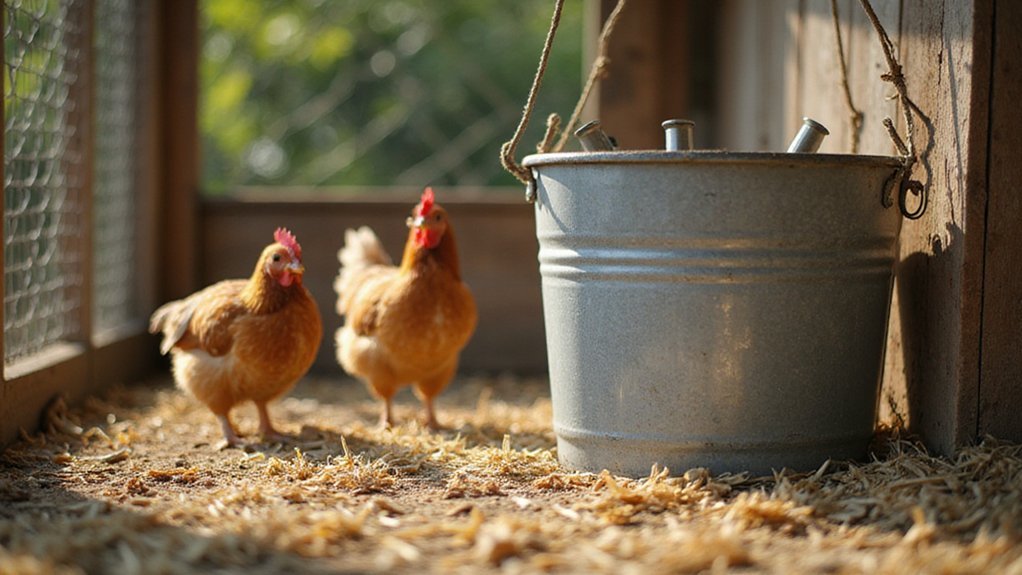
To prepare your bucket for the nipples, start by thoroughly cleaning all parts with soap and warm water. Flip the bucket upside down and mark six evenly spaced points, each one inch from the bottom edge. Drill a 5/16-inch hole at each mark, making sure pairs sit directly opposite each other. Smooth the edges of each hole with sandpaper to prevent leaks and ensure a clean seal. Placing the holes low on the bucket helps regulate water flow, keeping the water level consistent as it drains. Additionally, drill one 5/16-inch hole in the center of the lid for air intake. Use a food-grade bucket and the appropriate drill bits to avoid contaminants and prevent cracking. Proper preparation now ensures a tight fit for the nipples and a leak-free operation later. For a reliable seal, consider using food dehydrator techniques to dry the bucket components before assembly. This setup can be scaled up or down depending on the flock’s needs, accommodating larger containers or more waterers. For optimal flock health, ensure each nipple provides enough access for your birds based on their nesting box ratios. Choosing a coop with proper ventilation is also essential to prevent moisture buildup that can affect your waterer’s performance.
Choose the Right Nipples and Prevent Leaks
Choosing the right nipples and sealing them properly is essential to prevent leaks. Start by selecting the appropriate nipple type based on your system’s setup. Horizontal side-mount nipples should be drilled 1.25 to 1.5 inches from the bucket corners, while vertical nipples typically require a 11/32-inch or 3/8-inch drill bit. For the desired flow rate, Harris Farms delivers 4 to 6 ounces per minute, Stromberg’s offers 6 to 8 ounces, and RentACoop provides a lower flow of 3 to 4 ounces per minute. Using nipple systems like these promotes health by reducing contamination in the water supply. Properly positioning the nipples according to recommended roosting bar height ensures that chickens of all sizes can access the water comfortably. For a durable and value-oriented option, consider top-rated mason jars with lids that can double as water reservoirs in small setups. For long-term meat storage, a vacuum sealer for meat also helps preserve freshness.
When installing, screw the nipples in tightly after insertion and use O-rings to create a reliable seal. Avoid drilling holes larger than necessary, as bigger holes can lead to water leaks. Measure the spacing accurately at 1.25 to 1.5 inches from the bucket corners to ensure proper placement. After securing all nipples, immediately fill the bucket to check for leaks. Maintaining stable water pressure helps ensure a consistent flow without drips. Using nipples instead of open waterers reduces contamination risks and water waste, making your system more efficient.
Create a Vacuum Seal for Your DIY Chicken Waterer
To create an effective vacuum seal for your DIY chicken waterer, start by drilling an 11/32-inch hole near the bottom of a 5-gallon bucket. This size creates a tight fit for the rubber plug, which is crucial for maintaining the vacuum. Insert the rubber plug firmly into the hole, making sure it’s snug so air doesn’t leak. Place the bucket inside your water pan with the hole facing inward. Fill the bucket with water to your preferred level and then close the airtight lid securely. For a durable vacuum seal, consider using high-quality vacuum bags that resist punctures and maintain freshness. The homemade waterer operates using a similar vacuum principle as store-bought models, but offers ease of cleaning and the ability to modify based on farm needs. Choosing the best soil for your garden beds also supports healthy plant growth when paired with proper hydration methods. For a more reliable setup, consider pairing your waterer with a top chicken coop shed to provide your flock with a secure and comfortable environment.
The vacuum seal works by trapping air in the space above the water, so when water exits through the hole, the reduced internal pressure controls the flow rate. For a more reliable seal, apply silicone grease around the rubber plug to improve its tightness. Regularly check the lid and plug to prevent leaks—you’ll need a perfect seal to avoid overflows. If you notice no water flow, the vacuum might be too strong; reducing the water level or slightly loosening the lid can help. Keep the hole free of debris by cleaning it regularly to ensure continuous operation. A well-maintained vacuum seal keeps your flock hydrated efficiently and without waste.
Hang Your Chicken Waterer at the Perfect Height
Hang your chicken waterer at the appropriate height for your flock’s age. For chicks, position nipples 2 to 4 inches off the ground, aligning with eye level and a 30 to 45 degree head angle to make drinking easy. Adjust the height weekly as your chicks grow, raising the nipples to 6 to 8 inches by week six for pullets. For adult chickens, set nipples at head height, typically between 8 and 12 inches off the ground. Observe their behavior to ensure the height is correct: if they sit to drink, the line is too low; if they stand on their toes or hop to access water, it’s too high. If you keep a mixed flock, install multiple waterers with one nipple per four to six birds to prevent crowding. Make sure the water line remains level to avoid airlocks and ensure consistent water flow. Building a simple DIY chicken coop can provide a sheltered location for your waterer, protecting it from weather and debris. A reliable seal, similar to what Nesco vacuum sealers provide for food storage, keeps your waterer airtight and functioning efficiently. This approach mirrors how choosing perch height encourages natural roosting behavior and comfort for your birds.
Fix Common Chicken Waterer Problems: No Flow, Overflow, Tipping
If your chicken waterer stops flowing, overflows, or tips over, these issues usually have quick fixes. For no flow, start by checking for blockages. Scrub the float valve with high pressure to remove any debris and clear filter clogs caused by iron or sand. An air lock might also be the culprit—try raising the regulator end slightly to restore proper flow. If the water overflows, it typically indicates the float valve is stuck or water pressure exceeds 40 psi. Lowering the pressure and raising the water line can resolve this. Sediment buildup underneath the float can cause constant overflow too; regularly cleaning your waterer to remove mineral deposits helps prevent this. When choosing components, opt for durable valves, since flimsy ones tend to fail faster. If the waterer tips over, ensure the outlet hole faces downhill, and position the unit on level ground. Rotating the waterer so the hole is at the lowest point and anchoring it securely can keep it stable. To prevent a false full signal, inspect the float valve for dirt or debris lodged underneath that keeps it raised. For longevity and reliability, choosing components made from wide mouth jars can offer greater stability and easier cleaning during assembly. Homesteaders can also compost troublesome weeds separately to avoid introducing weed seeds into their garden beds. Applying low water pressure is crucial for reliably preventing overflow issues in any watering system.
Build This Waterer Under $20 With Recycled Materials
Using a 5-gallon food-grade bucket as your base is ideal because it’s inexpensive, safe for animals, and readily available. Recycled materials like this can be obtained for free or very low cost, making it easy to stay under $20. Start by drilling small holes for the poultry nipples, which allow your chickens to drink comfortably without spillage. Use a 3/8-inch drill bit to ensure a snug fit. Seal around each nipple with silicone sealant to prevent leaks; let it cure overnight. For safety, elevate the bucket stand about 6 inches off the ground to prevent rot and bacterial buildup. You can create a stand using recycled wood or bricks. Alternatively, consider a PVC pipe design, which costs less than $15. Use 3/4-inch PVC pipe and a cap, cutting the pipe to the desired length. Elevate the system to chicken-head height using recycled 2x4s or other scrap lumber. For a simpler assembly, you can drill holes with a 3/8-inch bit and hand tighten poultry watering cups into the bucket, ensuring a leak-free seal. This setup ensures your flock stays hydrated without exceeding your budget. Homesteaders should note that composting dog waste requires high heat and careful management to avoid pathogens. Sealing all connections with silicone caulk, similar to the method used in rain barrel construction, prevents costly water waste and keeps the system durable. For long-term durability, a well-sealed compost bin can also be constructed using similar recycled methods to manage organic waste efficiently.
Why a DIY Chicken Waterer Beats Store-Bought
A DIY chicken waterer offers greater control over cost, quality, and hygiene compared to store-bought options. By using recycled materials, you can build a durable system at a fraction of the price, reducing expenses significantly. Customizing the design allows you to tailor the waterer to your flock’s breed and coop size, ensuring a comfortable fit and easier access. Cleaning becomes more straightforward since you can design the setup for easy disassembly and sanitization. For example, incorporating a nipple-valve system keeps water clean, spill-free, and pest proof, which minimizes mess and deters rodents. The same principles of sterilization under pressure used in canning ensure the water container remains free of harmful bacteria when periodically sanitized. This approach is similar to selecting the best cover for raised garden beds, where durability and material quality are key to long-term performance.
Additionally, building your own waterer provides independence from supply chains; if a part breaks, you can fix or replace it immediately instead of waiting for a new product. Incorporating your own water filtration keeps the supply fresh and free of debris, while automation setups can be added to minimize daily maintenance. This means your flock benefits from a consistently reliable and clean water source that outperforms many store-bought options.