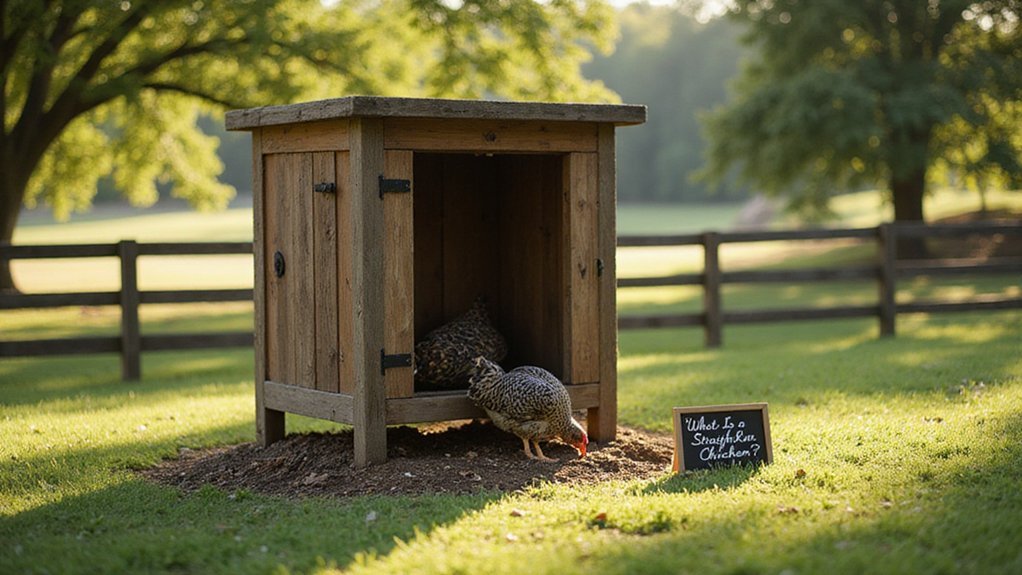
What Is a Straight Run Chicken?
Thinking about raising chickens but unsure what a straight run chick is? If you buy day-old chicks unsexed, you’ll get a random mix of males and females at a lower cost—usually 30 to 50 percent less than sexed chicks.
But that means you might end up with some noisy roosters. Here’s what you need to know to decide if a straight run is right for you.
What Exactly Is a Straight Run Chicken?
Ordering straight run chicks means receiving unsexed birds directly from the hatchery. You won’t know in advance whether they are males or females. This matters because feeding behaviors differ significantly between the sexes. Roosters tend to eat more and grow faster, while hens need a balanced diet for optimal egg production. If you’re raising meat birds, straight run might include too many hens, which aren’t suitable for meat, or too many roosters, which can be aggressive or unnecessary. For example, you should also consider that the best chicken coop you choose must accommodate the unpredictable flock dynamics and space needs of straight run birds. Planning for space and feed efficiency becomes difficult without knowing the gender mix. Additionally, males often exhibit more aggressive behavior, which could disrupt flock harmony. When housing straight run chicks, it is also wise to provide proper ventilation inside the coop to prevent respiratory issues. To maintain stable temperatures in such mixed flocks, using a solar-powered fan can help regulate airflow without increasing electricity costs. Overall, straight run chickens offer simplicity but require flexibility and management willingness to adapt to whatever gender ratio nature provides.
Why Are Straight Run Chicks Cheaper Than Sexed Chicks?
Because professional chicken sexing is a costly, labor-intensive process, straight run chicks skip that expense entirely. Hatcheries don’t pay specialized workers to examine each fragile chick, so you save 30 to 50 percent off the price of sexed birds. This price reduction also results from avoiding the waste of male chicks, as hatcheries sell all of them to maximize yield. Additionally, you won’t pay extra for breeds that can’t be accurately sexed, such as those lacking sex-linked feather color traits. Straight run chicks face less handling stress, which can improve survival rates and lower your cost per viable bird. Keep in mind, with a mixed batch, you’ll need to manage potential nutritional differences between males and females as they grow, since separation by gender isn’t possible upfront. If you are also composting coffee grounds from your kitchen, you can mix them into a top-rated compost bin to enrich the soil for your chickens’ garden forage.
What Are the Odds of Getting Hens From Straight Run Chicks?
Getting hens from straight run chicks is largely a matter of chance, with the odds roughly reflecting a 50/50 genetic split. If you hatch a small batch, such as 10 chicks, expect a random distribution that could be skewed—like ending up with 8 roosters and only 2 hens. This randomness is due to genetic variability, which makes the outcome unpredictable in small numbers. For those housing birds near wetlands, selecting wood duck nesting boxes can offer similar considerations for ensuring desired outcomes in waterfowl management.
Breed differences influence the accuracy of sex determination. For example, sex-linked breeds can have up to 93% accuracy in identifying females, significantly improving your chances. In contrast, non-sex-linked breeds remain close to the 50/50 split, meaning results are entirely left to luck. To maximize your likelihood of getting hens, consider ordering larger batches of chicks or opting for sexed chicks, which are sold with guaranteed gender identification. Small orders tend to be more unreliable, while larger ones help even out the randomness and increase your chances of raising hens.
The Biggest Risk: Too Many Roosters
Having more than one rooster per 10 to 12 hens is a significant risk. Excess roosters can cause overbreeding, which damages your hens’ health and productivity. Their backs become worn to the skin from frequent mating, leading to discomfort and infections. This physical stress also causes a spike in vent gleet, a condition marked by inflammation and discharge around the vent. As a result, egg production drops sharply because hens are exhausted and less inclined to lay. Even when multiple roosters coexist without fighting, their competition for mating still exerts pressure on hens. Providing roosting bars at the correct height for roosting bars can reduce nighttime aggression by giving subordinate birds safe, elevated perches. Likewise, using copper watering cans for your flock’s water supply can help promote better hygiene and reduce bacterial growth in the coop.
Along with physical damage, aggression skyrockets when too many roosters are present. Constant fighting and dominance disputes lead to feather pecking, injuries, and overall stress within the flock. Stress weakens the immune system, making your birds more vulnerable to diseases that spread quickly among an unhealthy flock. When dominance struggles become intense, it hampers the hens’ ability to maintain healthy genetic diversity, ultimately compromising their overall health and productivity. Providing a well-constructed chicken coop DIY kit can help manage excess roosters by offering separate, secure housing to reduce flock stress.
To keep your flock safe and balanced, carefully manage the number of roosters. The ideal ratio is one rooster for every 10 to 12 hens. If you find yourself with too many, you should remove excess roosters gradually. Options include rehoming, separating them into a bachelor flock, or using alternative housing such as dog cages. Removing roosters thoughtfully helps avoid abrupt changes that could stress the flock and keeps your hens healthy and productive.
How to Tell Roosters From Hens as They Grow
As your chickens grow, you can identify roosters by observing certain physical and behavioral traits starting around four months of age. Roosters are generally larger with thicker legs and develop brighter red combs and wattles much faster than hens. Chickens can also be identified by wing feather shape when their wings are held open, with females having a two-step hump and males a smooth curve. By 12 to 15 weeks, examine the hackle feathers: males will have long, pointed feathers, while hens will have rounded, oval-shaped ones. Saddle feathers, which hang near the base of the tail, only appear on roosters. Their tail feathers tend to be longer, more ornate, and often display shiny, colorful patterns. A healthy compost bin, by contrast, relies on a proper carbon-to-nitrogen ratio to break down organic material efficiently. Building your own DIY chicken waterer ensures a constant clean water supply for growing birds. Many keepers use Mason jars to create simple and effective waterers for their flock.
Behaviorally, roosters tend to puff out their chests and stand taller than hens. They also show more aggression by chest-bumping or asserting dominance even during activities like cage training. Around four months old, roosters start crowing daily, which is a clear sign. However, the only absolute way to confirm a hen is by egg laying, which begins once they start laying eggs.
What to Do With Unwanted Roosters From Straight Run Batches
If you have unwanted roosters from a straight run batch, rehoming them is straightforward with several practical options. Reach out to local farms, neighbors, or 4-H groups that might need a rooster for breeding purposes. Offering a rooster alongside a pullet can increase the chances of adoption, as it provides a compatible pair for breeding. For those constructing their own housing, cedar raised beds offer excellent durability and natural rot resistance for long-lasting garden structures, and a durable raised garden bed frame ensures stability during frequent use.
You can also list the roosters on online platforms like Craigslist or Facebook poultry groups. Include clear photos and detailed breed information to attract interested parties. Donating them to soup kitchens or food banks is another possibility, but make sure to verify safety guidelines and local regulations before doing so. A sturdy watering can from a hardware store simplifies daily hydration duties while managing these birds.
Managing roosters in a flock involves controlling crowing, which can be done with crow collars or by reducing daylight exposure. Feather trimming can help prevent damage to hens during mating. If you prefer not to keep them, professional butcher services can process the roosters for meat, ensuring sustainable and resourceful use of the entire bird. Alternatively, local livestock auctions or swap meets provide community-based rehoming options.
Where to Buy Straight Run Chicks
To buy straight run chicks, you can reliably source them from commercial hatcheries or local feed stores. Major hatcheries like Meyer Hatchery in Maine, McMurray Hatchery in Missouri, Cackle Hatchery in New York, Hoover’s Hatchery in Iowa, and Stromberg’s Chicks in Minnesota offer pre-ordered straight run batches. Prices typically range from $5 to $9 per chick. You can place your orders online weeks in advance, with options for pickup or shipping, depending on the hatchery.
Local feed stores also carry straight run chicks seasonally. Tractor Supply Company offers mixed batches during chick days for about $5 to $10 each. Fred Meyer Farm Supply and Beck’s Feed Store provide similar options, making them convenient sources if you want to see the chicks in person before buying. For homesteaders who need durable equipment alongside their chicks, Ace Hardware watering cans provide reliable options for hydration.
Choosing straight run chicks means you’ll get a mix of hens and roosters in the same batch, often with diverse feather patterns and colors. This adds variety and visual interest to your flock right from the start. Keep in mind that you should also be prepared for the roosters that will inevitably be part of the batch.
When Straight Run Chicks Are a Bad Idea
Straight run chicks are a bad idea if you want a specific number of hens or need to avoid roosters. About 50 percent of these chicks will be males, which can lead to noise complaints, rehoming challenges, or aggression issues in a small backyard flock. Non-sex-linked breeds make it impossible to determine gender at hatch, so you might end up with unwanted roosters that disrupt your breeding plans or cause trouble. This becomes an ethics issue if you’re unintentionally mixing unknown males into your flock, potentially diluting lineage purity. For a more durable and long-lasting alternative, consider using rot-resistant wood like cedar or redwood for your garden infrastructure. For a similar approach to outfitting your coop, you can look for mason jar handles designed to fit standard jars perfectly. For storing your chicken feed or supplies, choosing mason glass jars with airtight lids ensures quality and value.
Attempting to save money with straight run chicks often backfires. Cheap chicks may seem appealing but can incur hidden costs for rehoming or feeding aggressive roosters. In limited space, extra roosters can overcrowd your coop, increasing stress and the risk of injury. If your primary goal is egg production, only half of your flock will be hens, reducing your overall yield and making your setup less efficient.