Can You Compost Dog Poop in a Chicken Coop Bin?
Many people wonder if they can compost dog poop in a chicken coop bin. The quick answer is that it’s risky because the bin rarely gets hot enough to kill harmful germs like Giardia and Salmonella.
Mixing it with chicken manure can also cause odors and attract pests.
Here’s what you need to know to handle dog waste safely around your flock.
Why You Can’t Compost Dog Poop Like Chicken Manure
Dog waste cannot be composted like chicken manure because of significant differences in pathogens and decomposition requirements. Dog feces come from carnivores and carry persistent pathogens such as Giardia and Salmonella, which pose health risks if not fully destroyed. These pathogens require sustained temperatures of at least 165°F to break down safely, but typical backyard compost bins generally only reach around 140°F. This shortfall leaves harmful parasites alive, risking cross-contamination to plants and humans. In fact, non-thermally processed compost can still harbor active pathogens that are unsafe for any application near food crops.
Additionally, dog waste has a high acidity, with a pH between 4 and 6, which can harm soil health and plant growth. In contrast, chicken manure is alkaline and nutrient-rich, making it safe and beneficial when properly composted. Unlike dog waste, well-managed chicken manure is widely accepted by regulatory bodies for use on food crops. Because of these differences, regulatory bodies prohibit using dog waste in compost meant for food crops, while chicken manure is widely accepted.
Mixing dog waste with chicken manure or compost can introduce dangerous pathogens into your compost pile. To protect your garden and family, keep dog feces entirely separate from your compost system and handle it with specialized disposal methods instead.
What Temperature Does Your Chicken Coop Bin Actually Reach?
Your chicken coop bin generally reaches temperatures between 50°C and 65°C (122°F to 149°F), with the peak hitting around 65°C (149°F) during the first 7 to 14 days of composting. Maintaining a temperature of at least 55°C (131°F) for three consecutive days is essential for effectively destroying pathogens. The moisture level inside the bin should be kept between 40% and 60%; too much water causes temperatures to fall below 45°C (113°F), which compromises odor control and attracts pests like rodents and flies. During winter, without proper insulation, the bin temperature can drop to around 40°C (104°F), falling short of the safe composting threshold. To ensure optimal heat levels and safety, you need to regularly check the center of the bin with a thermometer. This helps prevent pests and guarantees that the composting process remains both effective and safe. For reliable monitoring, you should consider using a sturdy, long-stemmed probe thermometer, much like the best mason jars are chosen for their durability and quality seals. Adding carbon-rich brown materials such as dried leaves or straw can help balance the nitrogen from the dog poop and maintain the necessary high temperatures. Just as with raised garden beds, choosing the right compost bin materials helps ensure proper airflow and longevity for consistent heat generation.
Health Risks of Mixing Dog Waste With Chicken Compost
Handling the mixture of dog waste with chicken compost poses serious health risks. Airborne pathogens such as leptospirosis can be inhaled when you handle or disturb the mix. Children are especially vulnerable to soil contamination, which can lead to giardia infections. These zoonotic diseases can transmit from animals to humans through direct contact or contaminated environments. Ignoring these dangers increases the risk of illness in your household and coop. Proper disposal and management are crucial to prevent these health hazards and keep your family and flock safe. For safe wildlife management, consider using wood duck nesting boxes instead of mixing waste in compost.
The Exact Temperature Needed to Compost Dog Waste Safely
To compost dog waste safely, you need to reach and maintain specific internal temperatures. Aim for at least 140°F for a minimum of three consecutive days to kill parasites like roundworm eggs and control pests and odors effectively. To ensure complete sterilization of all pathogens, push the temperature to 165°F and keep it steady for 24 hours. It’s essential to measure the temperature deep inside the compost pile using a long-stem thermometer, rather than just the surface. Take multiple readings from different spots and log them regularly to track heat consistency. Using a continuous hot composting system or regularly turning the pile helps sustain these temperatures. Without reaching these thresholds, you cannot guarantee the compost is safe to use. The minimum safe temperature is 140°F, but 165°F remains the gold standard for complete pathogen destruction.
Why the Carbon-to-Nitrogen Ratio Fails When You Add Dog Poop
Adding dog poop to your chicken manure pushes the carbon-to-nitrogen (C:N) ratio too far toward nitrogen. Chicken manure already tips the ratio in favor of nitrogen, and dog waste increases it further. This results in a C:N ratio below 10:1, which starves microbes of the carbon they need for decomposition. Without enough carbon, microbial activity stalls, and the composting bin cannot reach the 60°C temperature needed to kill pathogens. Instead, ammonia emissions spike, creating a toxic environment and making odors worse. These foul smells attract wildlife like raccoons, rodents, and scavengers, turning your coop into a problem zone. Overloading the system with nitrogen from both chicken and dog waste disrupts the delicate balance, preventing proper decomposition. As a result, waste decomposes slowly, rotting rather than composting, and drawing unwanted visitors. For example, a food dehydrator uses steady, low heat and airflow to remove moisture without the risk of rot, which contrasts with the stalled, anaerobic conditions caused by the nitrogen imbalance. For comparison, correctly balanced roosting bars require a specific height for roosting to ensure chickens roost safely and avoid health issues associated with poor airflow or droppings accumulation. A vintage ceramic watering can offers a slow, controlled pour ideal for evenly moistening carbon-rich bedding without creating the soggy conditions that worsen nitrogen overload.
The Right Carbon Materials for Dog Waste Composting
Sawdust is the best carbon material for balancing dog waste’s high nitrogen load. It provides a strong carbon source that feeds microorganisms and absorbs excess moisture. Use two parts dog waste to one part sawdust to optimize decomposition and reduce odors. Choose untreated sawdust to avoid introducing toxins into your compost. For accurate moisture monitoring, use a top hygrometer designed for incubators to ensure conditions remain optimal for microbial activity.
If you want an alternative, shredded paper or plain cardboard work well because they improve aeration and quickly soak up moisture. Dried leaves are also suitable—they release carbon slowly and add insulation to your pile. For minimal nitrogen spikes, mow grass clippings sparingly. Regularly turn your compost to maintain a temperature between 130 and 170 degrees Fahrenheit to ensure safe decomposition. These accessible options make managing dog waste simple and cost-effective. For those who also preserve vegetables, a pressure canner ensures safe, high-heat processing of green beans. A garden wheelbarrow makes hauling these heavy materials much easier.
The Only Way to Compost Dog Waste Without Risk
To compost dog waste safely, you must create a dedicated, airtight bin exclusively for this purpose. Do not mix dog waste with kitchen scraps or regular compost, as this can spread pathogens. Maintain a precise ratio of two parts dog waste to one part sawdust or other high-carbon materials to balance the nitrogen-rich waste. Keep the internal temperature of the compost between 140°F and 165°F for several days to effectively kill bacteria and parasites. Turning the pile weekly helps distribute heat evenly, ensuring thorough pathogen elimination. After composting, allow the material to cure for six to twelve months before using it, and only apply it to ornamental plants, avoiding food crops to prevent health risks. Homesteaders can find practical guidance on building this type of dedicated bin in the expert insights provided. This strict system is essential to eliminate pathogens and protect your family and garden. For constructing the necessary container, reviewing the step-by-step build guide from a chicken coop design helps ensure proper aeration and insulation.
Where to Place a Dog Waste Composter to Protect Your Flock
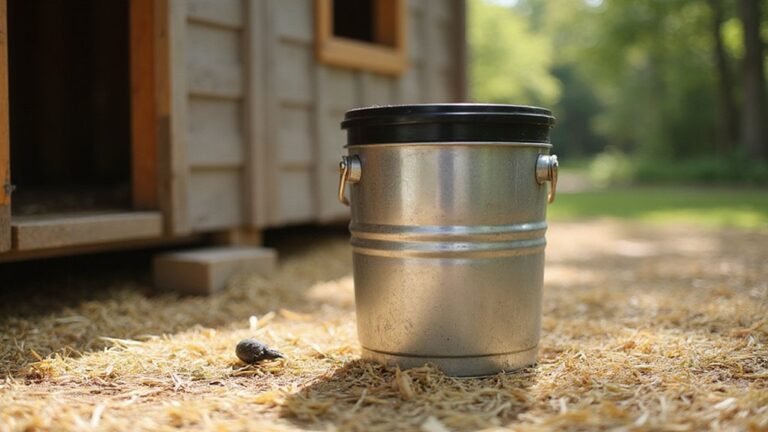
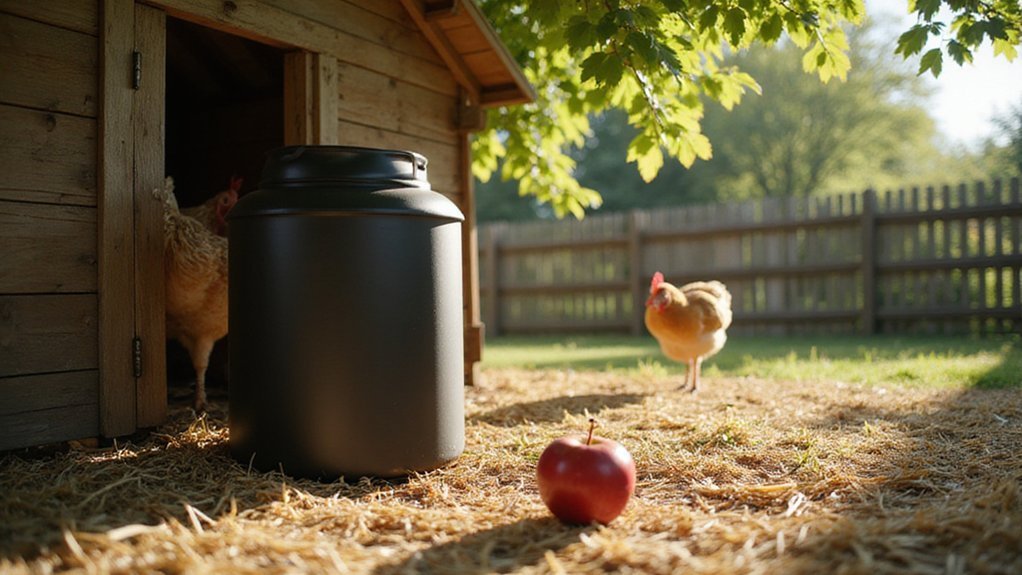
Place your dog waste composter on a sunny, dry slope at least 50 feet away from the chicken area. This distance helps prevent runoff contaminated with pathogens from reaching your flock’s water supply. Positioning the bin downwind from the coop minimizes the risk of aerosolized parasites or bacteria traveling toward your birds. Installing a physical barrier, like fencing or shrubbery, between the composter and the coop further reduces pathogen transfer. Cover the compost pile daily with sawdust to control odors and keep pests at bay, and use a tight-sealing lid to block scavengers. Be sure to assign separate tools for composting and chicken chores and wash your hands thoroughly before entering the poultry area. Proper placement and protection keep your flock safe and your composting system effective. This bin’s design, which includes air holes for ventilation, helps manage odors and supports aerobic decomposition within the dog waste composter.