DIY Chicken Run Plans for Your Backyard
Building a safe and functional chicken run in your backyard might seem overwhelming, but with some planning, you can do it yourself. Knowing the right size for your flock, protecting against predators, and using affordable materials are key steps to get started.
By the end of this, you’ll have the know-how to create a secure space that keeps your chickens happy and safe.
Plan Your Chicken Run Layout and Foundation Depth
Planning your chicken run layout and foundation depth is essential for creating a durable and functional space. Allocate at least 8 to 10 square feet per bird; for six chickens, aim for a total of 60 to 72 square feet. Conduct soil testing to determine if the ground drains well or requires a slope. Slope the run 1 inch per 8 feet to prevent mud buildup and help water drain away from the coop entrance. This slope not only improves drainage but also allows for future planting outside the run, such as shade-loving plants perfect for summer heat. When selecting materials, consider that many top-reviewed options emphasize durable construction and weather resistance to withstand outdoor conditions. For added protection against moisture, you can also use a vacuum sealer to store bulk feed and maintain freshness over time. Additionally, ensure roosting bars inside the coop are positioned at an appropriate height to keep birds comfortable and safe from drafts.
When digging foundation holes, make them 2 feet deep and add gravel at the bottom for better drainage. Mark the corners of the run with stakes and space your posts 6 to 8 feet apart to ensure stability. Proper planning of your layout and foundation depth will provide your chickens with a safe, dry, and comfortable environment.
Build Predator-Proof Chicken Run Walls and Flooring
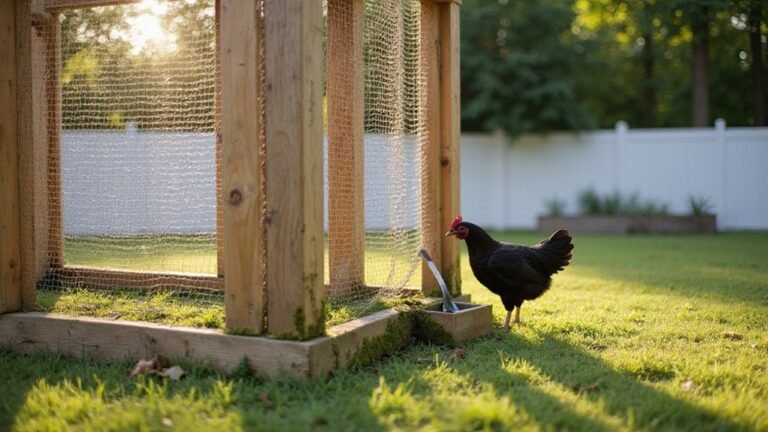
Constructing predator-proof walls and flooring requires sturdy materials and proper installation techniques. Start by building enclosures with heavy-gauge hardware cloth, ensuring the mesh size is at least 1/2 inch and the wire gauge is a minimum of 19. Avoid using chicken wire or thinner, flimsy wire such as 23-gauge, as they do not provide effective pest deterrence. When attaching sheets of hardware cloth, overlap each sheet by 2 to 3 inches and secure the overlaps with zip-ties or hog rings spaced every 3 to 4 inches. Fasten the cloth to the framing structure with galvanized staples placed approximately every 2 inches for maximum security. For additional cost efficiency, consider using homemade anti-dig spikes made from half-inch rebar pounded into the ground around the perimeter as an alternative to expensive commercial galvanized steel fencing. For larger bird breeds, you must also ensure adequate roosting space and structural height to accommodate their size, as cramped coops can lead to stress and injury. For keeping the area tidy, a countertop compost bin can help manage kitchen scraps efficiently. A 2 gallon watering can offers an optimal balance of capacity and manageable weight for daily watering tasks in the homestead garden.
For the flooring, cover the entire run area with hardware cloth, extending the material a few inches up the sides to seal any gaps that predators might exploit. Dig a trench 12 inches deep around the perimeter and bury an apron of hardware cloth that extends outward 18 to 24 inches. This excavation helps prevent digging predators from burrowing underneath. To enhance the barrier, you can add a layer of gravel or mulch over the buried cloth, which discourages predators and aids drainage. Anchor the corner posts firmly by setting them 18 to 24 inches deep in concrete. Space these posts every 6 to 8 feet to ensure a stable, predator-resistant structure.
Install a Corrugated Roof With Ridgecaps for Drainage
To install a corrugated roof with ridgecaps for drainage, begin by choosing galvanized steel or aluminum panels for their durability and rust resistance. Ensure a minimum slope of 2 inches per horizontal foot to promote effective runoff. Leave a 1/4-inch gap between panel seams to allow for thermal expansion and prevent buckling. Seal all joints thoroughly with an appropriate roofing sealant to prevent water infiltration. Install ridgecaps along the peak seam to prevent water from penetrating at the highest point. Attach drip edge flashing along the lower edge of the roof to direct water away from walls and foundation. When securing fasteners, make sure rubber washers are not overtightened to allow for movement caused by temperature fluctuations. For pest control, secure closure strips in valleys and at mountain ridges to block gaps where rodents and insects could enter. The reflective metal surface also enhances natural lighting by reflecting sunlight into the space below. Keep gutters free from debris and ensure the roof maintains a consistent pitch to prevent standing water, which can attract insects and promote mold growth.
Cut Costs With Free Pallets and Scrap Wood
You can build your chicken run entirely with free pallets and scrap wood. Using pallets from hardware stores, garden centers, or local businesses can cut your costs by 40 to 60 percent. Check Craigslist and neighborhood apps for free wood piles. Leftover 2x4s and plywood from construction sites work well for framing. Old fences and decking provide sturdy, weather-resistant planks that are ideal for fencing material. If you also raise chicks, you can adapt the same approach to build a brooder box using reclaimed wood for their early housing. Construct the fence by removing damaged slats from pallets and reinforcing the corners for extra strength. When designing the structure, consider following expert insights on proper drainage to keep the run dry and healthy. Reclaimed wood also offers flexible ventilation options—leave gaps between pallet boards for airflow or hinge scrap panels as windows. For egg storage and hatching, you can repurpose salvaged materials into a DIY egg incubator that regulates temperature and humidity. This approach not only saves money but also repurposes materials, giving them a second life. No need to buy new plywood or framing lumber when these free resources are readily available.
Assemble, Fasten, and Level Your Chicken Run Frame
Start by squaring your layout and setting your posts. Then, cut 10 of your 8-foot sticks in half to create shorter supports. Use deck screws to attach these shorter pieces into the square rib sections, forming the framework. For the edges, attach full-length 8-foot pieces to complete the rib frame, ensuring stability and uniformity. When constructing door frames, make two 4-foot squares, glue the joints for added strength, and attach hinges to allow smooth operation. Secure the frame to the ground with stake downs to prevent wind lifting, as recommended for stability in windy areas. Using chicken wire fence for the panels is a common and effective choice for containing your flock. For added sustainability, you can locate the run near a compost bin to easily recycle chicken waste into nutrient-rich soil. For an efficient build, consider using deck screws for all fastening as they offer superior grip and resistance to weather.
For the corner supports, use 7-foot 2x4s at the front corners and 6-foot 2x4s at the back, securing each with four screws in a box pattern for maximum stability. Install horizontal braces at 3 feet off the ground to reinforce the structure and prevent wobbling. Hoist the roof beams onto the frame carefully, making sure they align properly. Use a laser level to check that the entire structure is perfectly level — this ensures your run will be stable and safe for your chickens.
Before you start digging, perform proper soil testing to prevent posts from shifting later. Also, take early pest control measures by sealing any gaps in the frame to keep rodents out of your finished run. These steps guarantee a durable, level, and secure chicken run that will serve you well for years.