DIY Chicken Nesting Box: A Step-by-Step Guide
Wondering how to build a sturdy, cozy nesting box that encourages your hens to lay comfortably? You’ll want a design around 16 inches square for the base, with sides about 12 by 9 inches and a 24-inch back panel.
Using quality, weather-resistant wood and adding simple features like a hinged lid can make cleanup and egg collection easier.
Keep reading for a straightforward step-by-step to craft one yourself.
Choose the Right Size and Wood for Your Chicken Nesting Box
Use a size of 16 inches wide, high, and deep for each nesting box. This provides ample space for each hen to comfortably lay eggs. To prevent overcrowding, supply one box for every two to four hens. Recess the floor of the box by at least 0.25 inches to keep eggs from rolling out. The entry hole should be 6 to 7 inches in diameter and positioned about 4.7 inches above the floor. For durability, select wood such as cedar, redwood, or exterior-grade plywood, as these resist rot and weathering. Avoid untreated softwoods because they degrade quickly over time. Use wood that is at least 0.75 inches thick to prevent warping and ensure sturdiness. Good ventilation is essential for moisture control and hen health, so incorporate airflow features into your design. Wood duck boxes require careful attention to predator guards and drainage to protect eggs and ducklings from common threats. For a more comfortable environment, consider features found in the best chicken coops. Finally, ensure your wood is smooth and knot-free to maintain structural integrity and safety. You should also position the roosting bars higher than the nesting boxes to encourage hens to sleep above their laying area.
Cut and Prep Your Chicken Nesting Box Wood Pieces
Start by measuring and marking your wood pieces accurately. For the slanted sides, mark 12 inches up along one edge and 3.5 inches on the adjacent edge for the diagonal cut. Use a saw to cut along the line, creating a sloped edge. Repeat this process on a second square piece. From the 36-inch length, separate out the 12-inch wide piece to serve as a component side. Then, cut three rectangles measuring 12 by 9 inches to be used for side walls and dividers.
Next, trace out two rectangles of 24 inches in length for the back and bottom panels. For the top door, cut a piece measuring 17.25 by 39 inches. The floor will be made from a 17.25 by 36-inch piece. For the front lip, cut a strip measuring 2 by 24 inches. Always prioritize safety by wearing goggles during all cutting operations. Use proper woodworking techniques, such as drilling pocket holes 1.5 inches deep, to ensure strong joints and secure fastening of the pieces. For the nesting box door, consider reviewing reviews of automatic door models to integrate a timed opener for convenience. When disposing of sawdust and scraps, place them in certified compostable bags to maintain an eco-friendly workspace. You can also incorporate compost bins with worms to recycle organic waste from the coop efficiently.
Attach Sides, Back, and Bottom for a Square Frame
Attach the side panels to the bottom frame first, ensuring they align flush with the bottom edges. Use exterior-grade wood to withstand outdoor conditions. Gather a drill, 1 1/4-inch screws, and a square for precise assembly. Drill 3mm pilot holes to prevent splitting, then apply wood glue along the edges before driving in the screws. Maintain an 18mm gap between the bottom and the side panels to allow for drainage. This drainage gap aligns with the container compartments designed for easy access and egg collection within the stackable frame. For preserving excess eggs or feed, consider the vacuum sealer performance when comparing storage solutions.
Next, secure the back panel between the two side panels. Use 2-inch screws spaced every 6 inches to ensure deep, secure attachment. Make sure the back panel sits flush against the interior sides of the panels. To prevent leaks, run a bead of sealant along all joints where the back meets the sides.
Finally, attach the bottom panel by screwing in 1 1/4-inch screws every 4 inches along all edges. Use clamps to hold the entire frame steady and maintain perfect 90-degree corners during assembly. This approach guarantees a sturdy, weather-resistant frame suitable for outdoor use.
Install a Hinged Top and Front Lip for Easy Egg Access
Install a hinged top and front lip to make egg collection and cleaning easier. First, cut the top panel to match the box width, leaving a 1 to 2-inch overhang on the front and sides. Attach two to three pairs of metal hinges along the rear edge using ½-inch screws spaced 3 to 4 inches apart. Ensure a ¼-inch hinge gap exists to prevent binding, and test the lid at a 90-degree angle to confirm full clearance without obstruction. This hinged lid design, painted with a white finish for durability, allows easy top-opening access that minimizes chicken disturbance during egg collection. For remote setups, consider using a solar charger for fence to power an automatic door or light near the coop. Using mason glass jars with lids for storing collected eggs can maintain freshness and quality. For a similar protective structure, the same chicken wire ghost technique can be used to create a lightweight coop partition.
Next, install a front lip to prevent bedding and eggs from falling out. Cut a wooden strip 3 to 4 inches wide, matching the length of the box. Secure this lip to the front edge, placing it 1 inch below the entry hole. Use 1-inch nails spaced 2 to 3 inches apart. The lip should sit 1 to 2 inches high to block spillage and keep eggs contained. Make sure the hinge hardware does not protrude over the lip to avoid snagging chicken feet. Position the lip carefully to align with the hinge clearance for smooth operation and safety.
Sand Edges, Apply Sealant, and Check for Splinters
To ensure safety and longevity, thoroughly sand every edge after installing the hinged top and front lip. Start with 80-grit sandpaper to remove splinters and sharp corners, making the edges smooth to prevent injury to your hens. Then, switch to 180-220 grit sandpaper for a softer, more refined finish. After sanding, run a cloth along all edges to catch any remaining splinters, especially around screw holes. Use a non-toxic, outdoor sealant that is free of volatile organic compounds for a safe environment. When selecting your workspace, consider placing the nesting box on a stable rain barrel base to keep it elevated and protected from ground moisture. Apply it generously to all exterior surfaces and give the interior floor a light coat to help block moisture. Allow the sealant to dry for 24 hours, then wait an additional 48 hours for it to fully cure. For longer-lasting food storage, consider using top vacuum sealer bags to maintain freshness. Inspect the edges and surfaces after sealing, re-sanding any rough spots caused by clamps during assembly. Replace any cracked wood near joints to ensure the structure remains secure and safe for your hens. For storing extra feed and meat from your flock, a reliable vacuum sealer can help extend freshness and prevent freezer burn. Proper sanding and sealing will help protect the wood and keep your hens safe from splinters and moisture damage.
Mount 2–3 Feet High and Add Fake Eggs to Train Hens
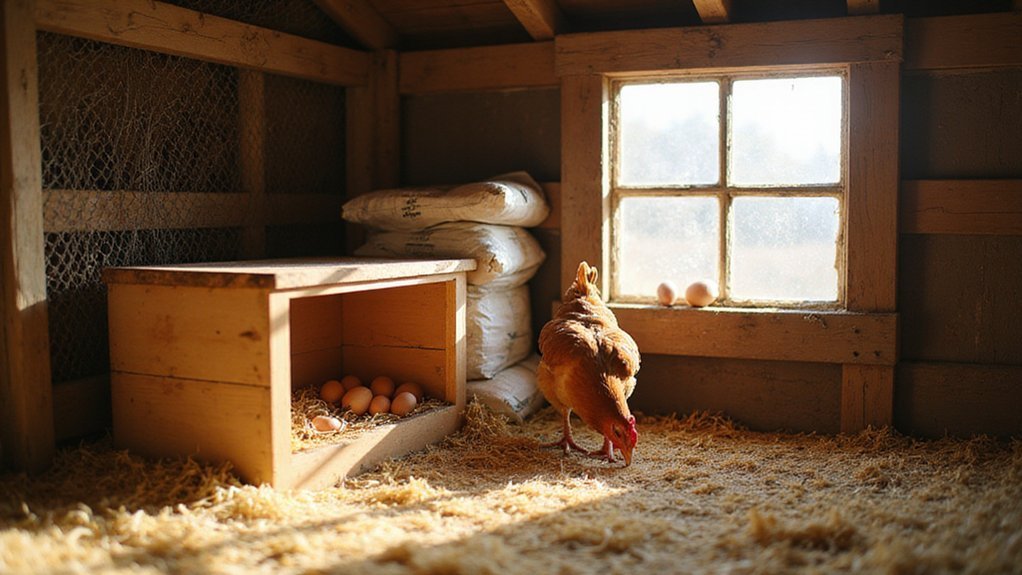
Mount your nesting boxes 2 to 3 feet off the coop floor. This height strikes a balance between easy access for hens and predator deterrence. Standard breeds can comfortably hop 18 to 24 inches, so keeping boxes within this range helps prevent accidents. Heights over 3 feet increase the risk of injury, especially for heavier breeds like Orpingtons. For larger breeds, ensure each box measures at least 35cm x 35cm to provide adequate space and prevent broken eggs. Choosing a bin-style box with a removable tray simplifies daily cleaning and waste collection.
Position the boxes at least 12 inches below the roosting bars to stop hens from sleeping inside. Place one ceramic or plastic fake egg in each nest to encourage laying. These mimic a recently laid clutch, triggering hens’ instinct to lay there. Using golf balls as substitutes during training at 18 to 20 weeks helps establish good habits.
Consistency is key. Within two weeks, you should see increased box usage. For best results, space the boxes about 4 inches apart and select the darkest wall of the coop, avoiding direct sunlight. Proper mounting height and thoughtful arrangement promote a smooth transition into regular egg laying.