Where to Buy Chicken Wire for Your Coop
Struggling to find the right chicken wire for your coop? You want something sturdy and affordable that will keep predators out but isn’t too tricky to install.
The good news is, there are several options—from big box stores to online suppliers—that fit different needs and budgets.
Keep reading to discover where you can buy chicken wire that’s strong, cost-effective, and easy to work with.
What Type of Chicken Wire Does Your Coop Actually Need?
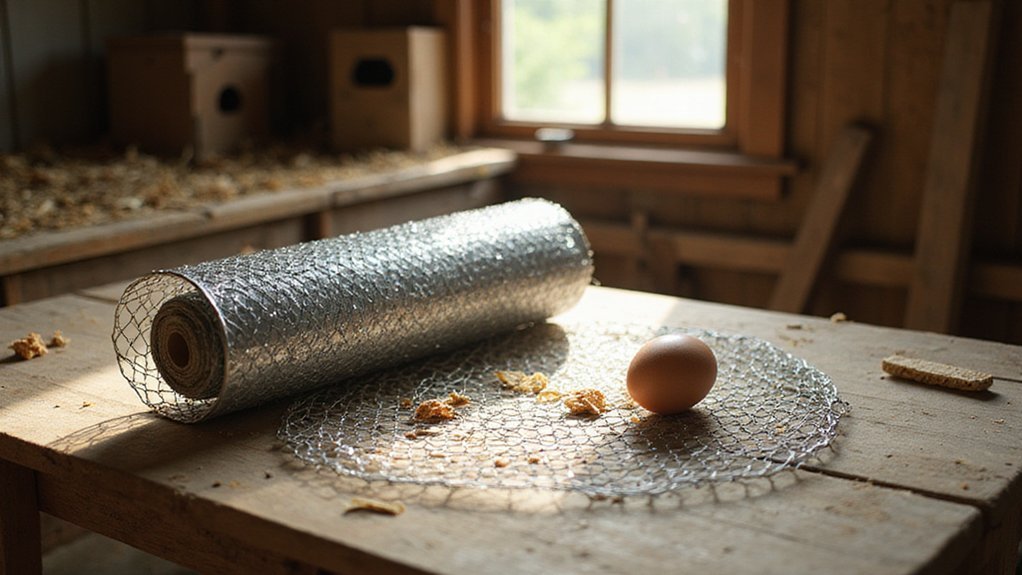
Not all chicken wire offers the same level of protection. Standard hexagonal chicken wire made of thin, flexible steel is primarily designed to contain chickens rather than prevent predators from getting in. Its lack of durability means it tears easily under pressure from raccoons, dogs, or other determined threats, making it a poor choice for predator exclusion. For better security, you should select galvanized welded wire or hardware cloth. Welded wire, with its rigid construction, resists bending and breaking, effectively blocking smaller predators like weasels and rats. Hardware cloth has the smallest openings, capable of stopping even snakes. For permanent coops in high-risk areas, use at least 19-gauge wire; thicker options like 14- or 16-gauge provide added strength and durability. Homesteaders can also apply the same principle of material selection when deciding whether to add compost bin weeds to avoid introducing weed seeds. Similarly, when choosing wire for your coop, considering color ideas for garden tools can help you match your setup to your homestead’s aesthetic while maintaining functionality. Relying solely on flimsy hex mesh leaves your flock vulnerable—choose a wire type that truly safeguards your chickens. Following a step-by-step build guide ensures the wire you select integrates properly with the coop frame.
Why Gauge and Mesh Size Matter for Your Coop
Wire gauge and mesh size are crucial for your coop’s security because they determine how well it can resist predator intrusions. The gauge measures wire thickness, with lower numbers like 14 or 16 gauge providing more durability and strength. Thicker wire resists bending and chewing from raccoons, dogs, and other persistent predators. For long-lasting protection, consider pressure treated lumber for the coop frame, as it resists rot in damp conditions. Avoid using flimsy 22-gauge wire, as it deforms easily and offers little protection over time. However, even a strong gauge is ineffective if the material is as flexible as chicken wire, which is why hardware cloth is recommended for its stiffness and ability to withstand predator claws. For the best overall protection, choose a top-rated coop that already incorporates secure, heavy-duty wire. For optimal predator resistance, roosting bars should be placed at a height that discourages ground-based attacks while still allowing easy access for your flock.
Mesh size effectively targets specific threats. A 1-inch mesh prevents most rats and birds from squeezing through but won’t stop snakes or mice. For those, you need a smaller grid—typically ½-inch hardware cloth with at least 19-gauge wire. This combination offers better rust resistance and prevents predators from pushing through. Choosing the right gauge and mesh size is essential to keeping your chickens safe and secure.
Big Box Stores vs. Local Hardware Stores for Chicken Wire
Both big box stores and local hardware shops carry chicken wire, but your choice depends on what matters most to you—price, convenience, or personalized guidance. Big box retailers like Home Depot typically offer bulk rolls at lower prices and maintain a consistent inventory, making them a good option for large projects where quantity is key. They excel at providing standard sizes and straightforward purchasing. However, for consistent drying results, a high-performance dehydrator often surpasses the utility of wire alone.
On the other hand, local hardware stores often specialize in niche products and offer tailored advice. They tend to stock eco-friendly options and pet-proof designs that are resistant to rust or predator damage. Staff at these shops can recommend the right gauge wire and mesh type suited for your coop, helping you avoid cheaper, easily bent wire that can compromise safety. While big box stores may save you money upfront, local shops often provide higher-quality materials and expert guidance to ensure your coop is secure and durable. To get the best of both worlds, consider buying bulk supplies from the chain store and visiting your local shop for specific advice and specialized materials. For squirrel control, reviews often highlight the best chicken wire options that balance durability and mesh size to prevent entry.
Amazon and Online Marketplaces: Convenience and Costs
To balance convenience and cost when shopping for chicken wire online, compare shipping options and delivery times across different marketplaces. Amazon Prime’s free two-day delivery typically reduces shipping fees by around $15 and gets your order to you within 48 hours, making it a fast and cost-effective choice for many buyers. With over 2,000 listings on platforms like Etsy, you’ll find options ranging from standard rolls to vintage designs, though customization can increase the price. If you are also looking for waterfowl housing, similar principles apply to choosing wood duck nesting boxes for effective predator protection. For example, nesting boxes designed with careful ventilation and predator guards are a top priority for attracting local avian guests. A rain diverter uses a similar principle to channel water away from areas you want to keep dry, much like how a diverter on a gutter system helps fill a rain barrel without overflow.
Eco-friendly materials are also available on Amazon, often with discounts if you subscribe for recurring orders through their “Subscribe and Save” feature. Walmart’s marketplace can deliver in the same day in select major cities, offering ultimate convenience for urgent needs. eBay provides bulk deals that can cut costs by up to 30% on large orders, which benefits those buying in larger quantities.
For quick purchasing, the “Buy Now” feature simplifies checkout and saves time. However, keep in mind that convenience can raise costs, so taking time to compare prices and delivery options on each marketplace can help you find the best combination of speed and savings. Gardener’s Supply Company also offers a durable Chicken Wire Crop Coop that provides long-lasting protection against deer and rabbits in garden beds.
Top Brands Worth Paying For (and One to Skip)
For serious predator protection, prioritize brands like Red Brand and Jackson’s, both offering 13mm mesh with triple galvanizing. Jackson’s uses heavier 19-gauge wire, providing extra strength, while Red Brand employs slightly thinner but still durable 20-gauge wire. Both options are excellent for keeping raccoons and other predators at bay. When comparing wire gauge, note that thicker gauges generally mean stronger wire, but mesh size and galvanization quality also play crucial roles in durability and security. For example, understanding the principles behind a compost bin helps homesteaders see why proper airflow and containment are just as vital for soil health as securing a coop for livestock. For gardeners who also maintain plants, a 1 gallon watering can metal is a practical tool for precise hydration of coop-adjacent crops. Similarly, if you use heat lamps in the coop during cold weather, choosing a heat lamp bulb with durable ceramic construction can reduce fire risk and improve heat efficiency.
How to Compare Chicken Wire Prices Without Overpaying
To compare chicken wire prices effectively, focus on the cost per square foot rather than the price per roll. A standard 19-gauge hexagonal mesh typically costs between $0.15 and $0.25 per square foot, but it is suitable mainly for temporary setups under two years. For environments exposed to moisture or coastal conditions, durability becomes more important. For similar outdoor durability, consider how the construction of a raised garden bed with compost can enhance soil quality and structural integrity. A 17-gauge hot-dip galvanized wire generally costs between $0.30 and $0.40 per square foot but offers a lifespan of over five years, making it a more cost-effective choice for long-term use. A similar principle to sealing mason jars involves preventing air and moisture infiltration, ensuring a longer-lasting barrier against deterioration. When evaluating different rolls, consider roll size because smaller 10-foot rolls usually cost about 40% more per foot than 100-foot rolls. Don’t automatically choose the cheapest option; instead, match the gauge and coating to your coop’s exposure conditions. Prioritizing durability over upfront savings helps you avoid having to replace or reinforce the fencing sooner than expected. For raised garden beds, a welded wire cover provides similar long-term protection against pests and weather.
How to Install Chicken Wire (Tools and Techniques)
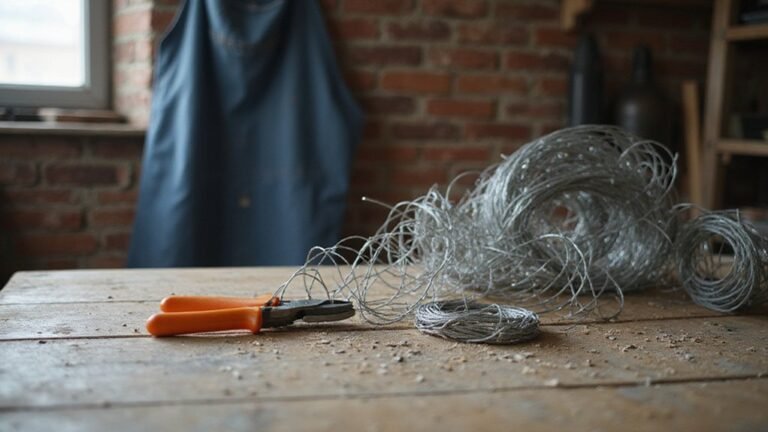
To install chicken wire effectively, you need a few essential tools: a staple gun, poultry staples, wire cutters, pliers, and wire ties. Use galvanized fencing accessories with protective coatings to prevent rust and ensure durability. Begin at a corner, pulling the wire taut as you work across the frame to prevent sagging. Secure the wire every 3 to 4 inches along wooden posts with staples, angling them for a stronger grip. Overlap sections of wire by at least 2 inches and twist the ends together with pliers to create a sturdy barrier. If you’re attaching the wire to metal posts, use twistable wire ties for a firm hold. Bury the bottom edge of the wire 12 to 18 inches underground to keep burrowers out and ensure it sits flush against the soil, preventing escapes. After installation, inspect the entire perimeter carefully to seal any gaps, especially around doors, where doubling the wire layers can add extra durability. However, a more professional method drives nails only at the top and bottom edges, eliminating staples that can damage the wire. For managing leftover scraps and small trimmings, consider a kitchen compost bin to conveniently collect organic waste for your garden. For watering plants near the coop, a Dollar Tree watering can offers an affordable and lightweight option for daily garden tasks.
Where to Buy Custom Lengths and Bulk Rolls
You can buy custom lengths and bulk rolls from a variety of sources to suit your coop’s needs. Hardware stores typically stock standard widths ranging from 2 to 4 feet, making them suitable for smaller projects or repairs. For longer runs, home improvement centers offer rolls up to 100 feet, giving you more flexibility in covering larger areas with fewer seams. Online platforms are your best bet for ordering precisely tailored widths and lengths, allowing you to match your coop’s exact dimensions without unnecessary waste. Local farm supply stores often carry lower-gauge wire in bulk, providing added strength for durability and security. Specialty suppliers can also offer pre-cut lengths ready for immediate installation, saving you time. To get the best value, compare prices across different retailers, as bulk purchases tend to lower the per-foot cost. While color options for chicken wire are limited, you can enhance its appearance by painting it. Consider the environmental impact by choosing galvanized or recycled wire—these options help reduce waste and improve longevity. For preserving any meat you harvest, using the right equipment, such as a vacuum sealer, ensures optimal freshness over longer storage periods.