The Biggest Watering Can for Your Flock
Struggling to find the right water setup for your flock? The key is choosing a waterer that suits your group size and keeps everyone hydrated without fuss.
For up to 25 birds, a 5-gallon waterer works well, and for larger flocks, having two prevents competition.
Proper maintenance and adjustments will keep your birds drinking comfortably year-round.
Keep reading for all the tips to make it happen.
How Much Water Does Your Flock Actually Need?
The amount of water your flock needs varies significantly with age, breed, and weather. A one-week-old pullet requires only about 0.25 gallons per day, which is enough for her small size and limited activity. By the time she reaches 20 weeks, her need increases to approximately 2.25 gallons daily as she grows and becomes more active. Broilers—meat birds raised for rapid growth—drink even more; a six-week-old broiler consumes about 2.35 gallons each day. For context, a pressure canner for green beans can hold up to 20 quarts of water, which is far more than your flock needs daily. A food dehydrator offers a practical way to preserve surplus produce from your garden, reducing waste and providing healthy treats for your birds.
Adult laying hens generally drink up to 0.13 gallons per bird per day, mainly sipping small amounts frequently. However, their water consumption drops if they are not laying eggs. Hot weather can boost their water intake by 50 to 90 percent, so it’s essential to adjust water supply during heatwaves. Always ensure water quality is high, as poor-quality water can reduce intake and negatively impact health. Choosing a top-rated chicken coop can also help protect your flock’s water supply from contamination.
Monitoring drinking behavior is crucial. Birds that are ill or lacking nutrients tend to drink more, while water deprivation for just 24 hours can reduce their laying performance. Keep clean, fresh water readily accessible at all times to support your flock’s health and productivity.
What Size Waterer Works for 6 to 25 Birds?
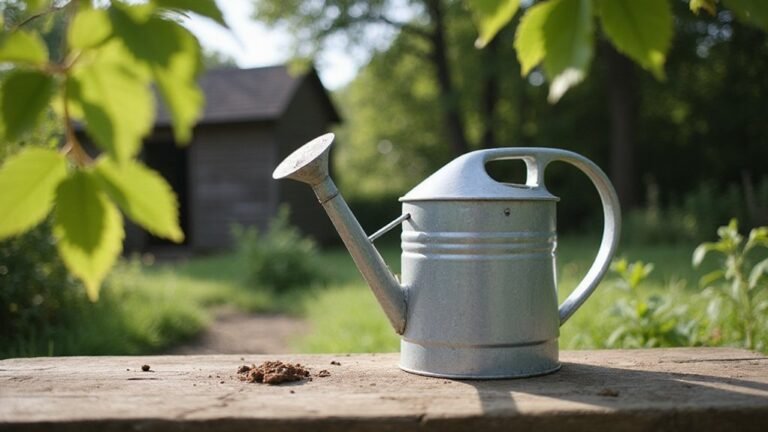
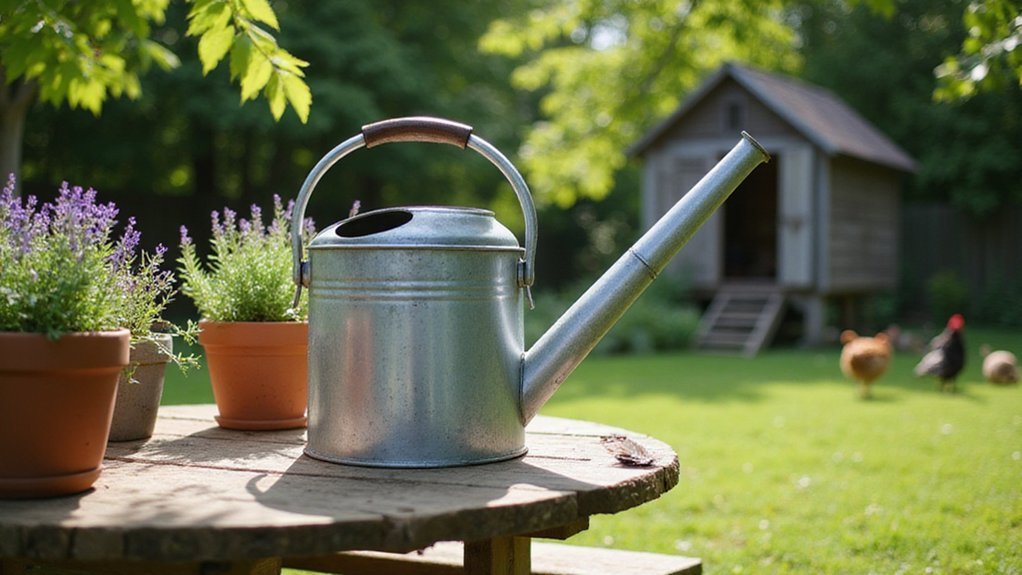
A 5-gallon waterer works well for 6 to 25 birds, with two units recommended for larger groups. For flocks of this size, placing two 5-gallon waterers in different locations ensures each bird has easy access and reduces competition. A 5-gallon nipple waterer or horizontal bucket system provides sufficient capacity, supporting the group’s hydration needs. It’s advisable to select a waterer that holds at least 2 to 3 days of water to account for evaporation and hot weather, helping you avoid frequent refills and maintaining consistent water availability for your flock. For smaller setups, a Little Giant Double Wall Metal Poultry Fount holds 2 gallons and is made from heavy-gauge galvanized steel. Similarly, a raised garden bed designed for strawberries also requires careful capacity planning to ensure healthy plant growth. For those also attracting wood ducks, top nesting boxes provide essential protection during breeding season. For preserving your harvest, a food dehydrator offers excellent performance for drying fruits and vegetables.
Do You Need One Waterer or Two for Your Flock?
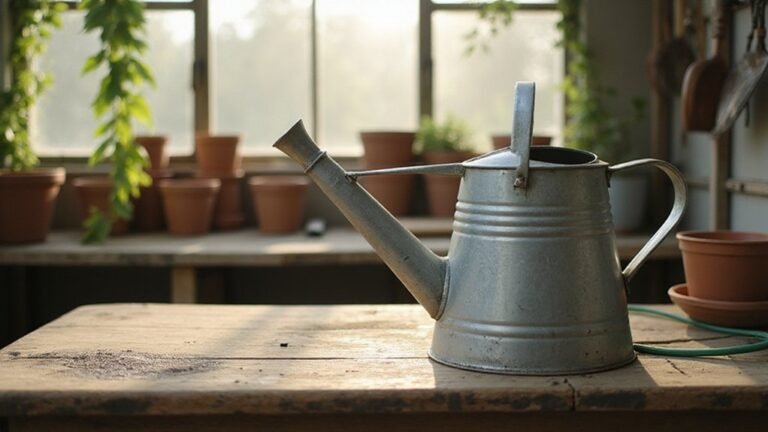
One waterer is enough for flocks under 10 birds, but using two waterers is highly recommended for safety and ease. A single unit can suffice for small flocks, but two prevent bullying and ensure equal access during busy times. Having a backup waterer safeguards against leaks, freezing, or other issues that might leave your flock without water. Using two also helps spread out access points, reducing crowding during feeding and watering times. Good coop ventilation can reduce humidity and freezing risks, but a second waterer remains a reliable safety measure. For flocks over 10 or if you want added security, setting up two waterers ensures your birds stay hydrated and stress-free. Larger pens require strategic placement near broilers’ usual areas to guarantee all birds can access water. When positioning waterers, ensure they are not placed directly under roosting bars to prevent contamination from droppings. For added convenience, place waterers at the ideal nesting box height to prevent debris and keep the water clean. Homesteaders using a Rae Dunn watering can should also lift it slightly off the ground to minimize dirt kicked into the water.
Set the Right Height So Every Bird Gets a Drink
Adjust nipple height regularly to ensure every bird drinks comfortably. For day-old chicks, set nipples at about 4 inches off the ground—eye level for tiny birds—so they don’t strain or sit unnecessarily. By week three, raise the nipples to 6 inches to match their shoulder height, encouraging proper posture during drinking. For pullets aged 6 to 20 weeks, maintain the nipples at 6 to 8 inches high, keeping the drinking angle around 60 to 70 degrees. Adult chickens over 20 weeks require nipples at 8 to 12 inches, with larger breeds possibly needing placement 2 to 4 inches higher. A simple wood frame can raise the entire watering system to these adjustable heights. Consider also the raised bed garden layouts, as proper spacing around the watering station helps prevent muddy areas and keeps the flock dry. For reliable watering designs, consult Wirecutter watering cans to ensure durable materials and ease of adjustment.
Water pressure is also key; proper pressure ensures easy activation of the nipple without requiring excessive force. Observe your birds: if they sit and huddle, the height might be too low; if they hop or stand on tiptoes, it could be too high. Adjust the nipple height weekly as your flock grows to keep the drinking position natural, comfortable, and stress-free for every bird.
Adjust Your Setup for Summer Heat and Winter Freeze
To keep your flock hydrated during temperature extremes, adjust your watering setup accordingly. In summer, place waterers in shade to keep water temperature below 95°F. Refill twice daily and add ice cubes to lower water temperature by 5 to 10 degrees, encouraging more drinking. Improving airflow is crucial; open coop windows on two sides to create cross-ventilation, which can lower indoor temperatures by 5 to 8°F. Moving water with a pump prevents algae colonies and stagnation, improving water quality. For optimal coop health, applying ag lime to the floor helps control ammonia and moisture. Apply a vacuum sealer to securely store extra feed bags, keeping them fresh and pest-free. A rain barrel system can collect and store water for your flock, reducing reliance on municipal supplies during hot weather.
During winter, switch to heated waterers or deep-bowl models designed to prevent freezing. Check and refill these every 2 to 4 hours to ensure constant access. Wrap water lines with insulation below -10°F to avoid freezing in severe cold. Adding electrolytes to drinking water helps prevent dehydration caused by cold stress. Adjust water volume based on temperature: provide about 2 to 3 pints per hen when it exceeds 95°F, but reduce intake by 10 to 20 percent when temperatures drop below 40°F. Always maintain backup capacity with at least 50 percent of your daily water needs to prevent shortages.
How to Clean Your Chicken Waterer the Right Way
To effectively clean your chicken waterer, follow these steps. First, empty all old water from the reservoir. Rinse away any loose debris and dirt. Next, scrub all surfaces with a mild dish soap using a dedicated brush, ensuring to clean even the tight crevices where grime can hide. After scrubbing, rinse thoroughly with clean water until no soap suds remain. Allow the waterer to air dry completely before refilling. When using bleach, fill the waterer to the algae/mold line before adding any bleach for effective cleaning. For sanitization, you can use natural disinfectants like diluted white vinegar, mixing one part vinegar with three parts water. Alternatively, a mixture of two teaspoons of bleach per gallon of water provides a deep clean. Hydrogen peroxide can also be used to soak and remove biofilm, but always rinse well afterward. For homesteaders with multiple birds, a 1 gallon watering can makes refilling and rinsing components much easier. Keeping your waterer clean is just as important as maintaining a tidy kitchen counter for food safety. Similar to canning green beans, maintaining sterile conditions prevents harmful pathogens from developing. Never refill the waterer until it is completely dry, and check regularly for cloudiness or foul odors to prevent bacteria buildup. Regular cleaning ensures your flock always has access to safe, healthy drinking water.