How to Can Green Beans Without a Pressure Canner
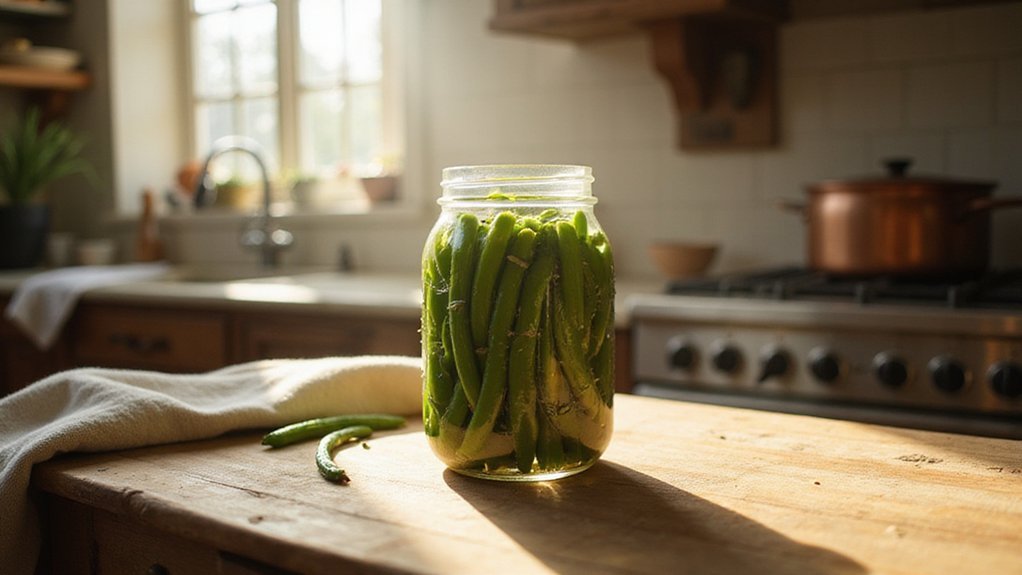
If you want to preserve green beans without a pressure canner, pickling offers a safe alternative.
By processing jars in a boiling water bath, you can enjoy homemade canned green beans without specialized equipment.
Just follow a few simple steps to ensure your preserved beans are both tasty and safe to eat.
Keep reading for the full process.
Why Plain Green Beans Need Pressure Canning (and Why Pickling Solves It)
Green beans need pressure canning because their low-acid pH makes them unsafe to process with a water bath alone. With a pH between 5.3 and 5.8, they fall into the low-acid category, meaning boiling water won’t effectively kill the botulinum spores that can survive indefinitely at high temperatures. Simply boiling the jars in a water bath doesn’t provide the necessary environment to destroy these spores, which could produce a deadly toxin if left unchecked. The same principle applies to roosting bar height, which must be carefully determined to meet the birds’ needs. Selecting the right poultry feeder design ensures both feed quality and safety for your flock. For those raising waterfowl, wood duck nesting boxes provide a secure habitat that mimics natural cavities. Pickling can solve this problem by adding vinegar to the beans, which drops the pH to between 3.3 and 4.0. This high-acid environment prevents the spores from germinating, making a boiling water bath both safe and effective. When you pickle green beans, you’re transforming them into a high-acid food, so you can safely process them with a water bath. Without this step, pressure canning remains the only reliable method to ensure safety.
How to Prepare Your Beans and Make the Pickling Brine
First, select firm, brightly colored beans and rinse them thoroughly. Trim off the stem ends and cut the beans into uniform 2-inch pieces to ensure even packing. Quality is key; discard any beans with blemishes or soft spots. Next, blanch the bean pieces in boiling water for 4 to 5 minutes, then immediately transfer them to an ice water bath to halt the cooking process. Drain the beans thoroughly to prevent excess moisture from diluting your brine. If you cannot can all the beans immediately, store the freshly picked beans in the fridge to preserve their freshness until processing. For those who also raise backyard poultry, a well-ventilated coop is essential for keeping your flock healthy and productive. A consistent watering routine for your garden crops helps ensure the beans are firm and fresh at harvest.
For the pickling brine, combine one cup of water with one cup of white vinegar for each quart of beans. Add one tablespoon each of kosher salt and sugar, stirring until fully dissolved. You can customize the flavor by adding garlic, dill, or pickling spices—just be careful not to add too much, which could overpower the beans. Bring the mixture to a rolling boil over medium heat, ensuring the salt and sugar dissolve completely. Remove from heat once boiling.
Ladle the hot brine over your drained beans, leaving about one inch of headspace in each jar. This space allows for expansion during processing and prevents overflow. Do not pack the jars tightly at this stage; you’ll do that after adding the brine. If you also keep chickens, consider following a step-by-step build guide for a functional coop. Proper preparation of beans and brine sets the foundation for crisp, flavorful pickles.
Pack Your Jars: Filling, Headspace, and Sealing
After preparing your brine and blanching the beans, you need to pack your jars with the prepared contents. For both raw and hot pack methods, leave exactly 1 inch of headspace above the beans. This space allows for safe expansion during processing and helps ensure proper sealing. Use a wooden chopstick or a non-metallic tool to remove air bubbles by gently sliding it around the inside of each jar; this step prevents air pockets that can cause spoilage. Ensure you include one teaspoon of canning salt per quart jar to aid preservation. You should also use high-quality mason jars to avoid defects that could compromise your seal. Always check jar rim smoothness to prevent any nicks from breaking the seal. Choosing the right container is vital, as using a raised garden bed can simplify growing fresh, healthy produce for canning.
Make sure the beans are fully submerged in the liquid without touching the rim of the jar. Wipe each jar rim with vinegar or a damp cloth to remove any residue, then dry thoroughly. Place a new, properly fitting lid on each jar and tighten the band until it just feels snug—avoid over-tightening, as this can interfere with sealing. Label each jar with the date of processing to keep track of shelf life. Remember, maintaining the correct headspace is crucial to allow for expansion and to prevent jar breakage, so don’t disturb the beans or liquid when adding hot fill material. Proper sealing now ensures your jars stay safe and preserves your harvest effectively later.
How Long to Process Pickled Green Beans in a Water Bath
Process pint jars for 5 minutes and quart jars for 10 minutes at sea level. If you’re above 1,000 feet, add 5 more minutes, making it 10 minutes for pints and 15 minutes for quarts. Above 6,000 feet, process for 20 minutes. Calibrate your timer to start with a 10-second countdown. If your jars don’t seal properly, repeat the process with another 10-minute cycle. After boiling, let the jars rest for 10 minutes before removing them with a jar lifter. This timing ensures your pickled green beans are safely preserved. For additional guidance on general water bath canning safety, always use a rack to keep jars off the bottom of the pot. To prevent breakage, always pre-warm your jars in hot water before filling them with the hot pickling liquid, just as a sturdy coop protects hens from sudden temperature shifts.
Cool, Check Seals, and Store Your Canned Beans
After processing and sealing your jars, let them cool undisturbed on a towel-covered surface for at least 12 hours. Up to 24 hours is safe and can help ensure a proper seal. During this time, avoid drafts and movement, as instability can interfere with proper sealing and affect flavor and nutrients. Lids typically vacuum and suck down after cooling, creating a downward suction that confirms a strong seal.
To check the seal, press the center of the lid—if it doesn’t flex or bounce, the seal is likely secure. Once cooled, remove the metal ring and gently lift the jar by the lid to confirm it stays attached. Tapping the lid with a spoon produces a tinny sound if sealed correctly; a hollow sound indicates a failed seal. A concave, firm lid shows the jar has sealed properly.
After confirming a good seal, remove the rings, wash the jars with warm soapy water, and wipe them dry. Label each jar with the processing date and store in a cool, dark, dry pantry, away from heat sources. If a seal is compromised, reprocess the jar within 24 hours using a new lid, or refrigerate and consume within 3 days. Discard any jars that are bulging or leaking.
Troubleshooting Common Pickled Bean Canning Problems
Even after you cool, check seals, and store your pickled beans, you might still encounter issues like unsealed lids, browning, mushiness, cloudy brine, or gas production. Unsealed lids often happen if you remove rings too early or overfill jars past the 1/4-inch headspace guideline. To prevent browning, avoid over-blanch beans beyond 60 seconds and keep jars away from direct sunlight. Mushiness results if the brine temperature drops below 140°F during raw packing, so maintaining a hot brine is essential. Cloudy brine typically comes from unwashed garlic or high-mineral water; using distilled water and thoroughly cleaning ingredients helps keep the brine clear. Gas production indicates insufficient vinegar acidity—never rely on fermentation techniques here, as they can spoil your pickled beans. Always select proper storage containers like clear glass jars and shield them from light to preserve color and texture. For extended shelf life, consider using a vacuum bag sealer to create an additional airtight barrier for individual servings of green beans. For raised beds made of wood, Western Red Cedar is a top choice because of its natural rot resistance and long-lasting durability.