Where to Buy Egg Cartons for Your Homestead
Finding affordable egg cartons for your homestead can be easier than you think. You might be surprised to learn you can often find free or low-cost cartons from local sources or buy in bulk for a fraction of the retail price.
Knowing where and how to source them helps keep your supplies steady and eco-friendly. Keep reading to discover the best options for your needs.
Can You Get Egg Cartons for Free From Local Restaurants?
Yes, you can get egg cartons for free from local restaurants. Many small eateries and delis often have surplus cartons and may be willing to give them away, especially if you’re a regular customer or if you ask politely. It’s worth calling ahead or chatting with the staff when you visit to see if they have any extras to spare. Additionally, consider that well-maintained chicken coops produce fresher eggs, which may affect how many cartons you need. For gardeners who also build their own structures, learning to construct a raised garden bed can provide sturdy outdoor space for organizing carton collections. For those growing herbs, a top-raised garden bed offers excellent drainage and easy access during harvest.
Additionally, some community platforms like Facebook Buy Nothing groups or neighborhood online boards frequently feature residents offering free cartons. Farmers’ markets or farm stands, such as FarmerJawn, also organize giveaways or have surplus cartons available. Visiting these outlets directly can often save you money while helping reduce waste.
Keep in mind that while free options are convenient, always check the condition of the cartons to ensure they are clean and intact for your needs. These sources can keep your supply well-stocked without spending a dime.
Where to Find the Cheapest Egg Cartons in Your Area
The cheapest egg cartons in your area can often be found through community recycling programs and online wholesalers. Local retailers, such as farm supply stores like Agway, sell cartons in bulk for around 25 cents each, which is a good deal if you need a large quantity. Walmart offers 24-packs for approximately $12.99, but online options tend to be cheaper overall—Amazon, for example, lists 100-pack cartons at about 10 cents each. For those building their own coop, using pallet chicken coop designs can further reduce costs by repurposing free materials.
Recycling centers and community bins are excellent sources for free, good-condition cartons. Many communities run programs that allow residents to pick up discarded cartons, saving you money. Classified ad sites like Kijiji have over 64 listings in some regions, often offering free or low-cost options from neighbors. Combining these free resources with bulk purchases online is the best way to minimize costs while ensuring you have enough cartons. For those also protecting their crops, using a raised garden bed cover can extend the growing season and shield plants from pests. For those also upgrading their coop, consider investing in solar chicken coop doors for automated, energy-efficient access.
Paper Pulp vs. Plastic vs. Foam: Which Egg Carton Is Best?
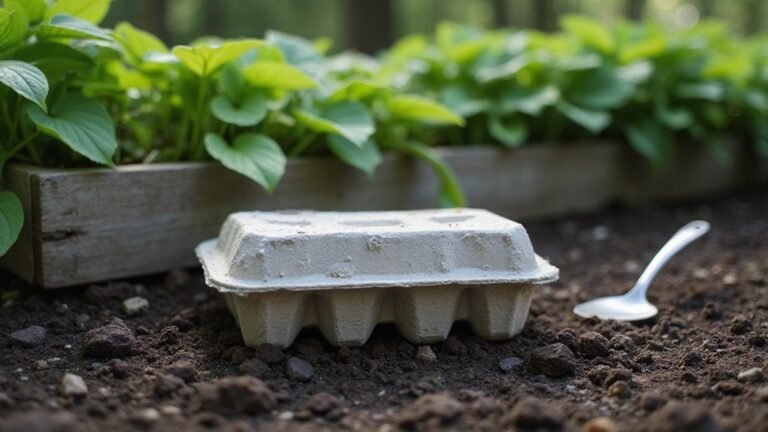
Paper pulp egg cartons are generally the best choice for balancing protection, environmental friendliness, and freshness. They have a low breakage rate of about 7.31%, slightly better than foam but not as tough as plastic. Their breathable material helps keep eggs fresher by reducing moisture buildup, which is essential for preserving quality. Additionally, paper pulp is fully biodegradable and compostable, making it eco-friendly and suitable for sustainable practices. While plastic trays are durable and fully recyclable, foam options tend to break more easily and are not accepted in curbside recycling programs, ultimately impacting their environmental footprint. If you want a carton that protects eggs well, supports environmental goals, and maintains freshness, paper pulp stands out as the best overall option. For those looking to incubate eggs rather than just store them, investing in a reliable incubator can significantly improve hatching success rates. Homesteaders familiar with preserving eggs may also appreciate that a similar sealing mason jars process can help extend the shelf life of other stored foods. For those designing a duck habitat, similar considerations apply when choosing wood duck nesting boxes for optimal protection and sustainability.
Best Online Retailers for Bulk Egg Cartons
Several online retailers offer bulk egg cartons suitable for homesteaders. Stromberg’s Chickens sells recycled cardboard cartons priced around $35 to $40 per unit, with free shipping on orders over $150. These cartons emphasize recycling and sustainable packaging, making them ideal for eco-conscious homesteaders. For those who also compost their coffee grounds, best compost bins can help turn organic waste into nutrient-rich soil. A proper canning routine alongside your homesteading tasks can be supported by a top pressure canner for preserving garden produce.
The Egg Carton Store stocks over 10,000 units of pulp, plastic, and foam cartons, offering bulk discounts of up to 80% on pallet orders. This large inventory and significant savings make it a top choice for those needing a high volume at lower costs.
EggCartons.com provides paper pulp, plastic, and foam cartons priced between $30 and $50 each. They offer free shipping on orders over $150, with options to buy in cases of 250 cartons for about $60. This flexibility suits homesteaders wanting both variety and affordability.
Egg Cartons Online features tiered pricing starting at $33.99 per unit, plus free FedEx Ground shipping. Their pricing structure benefits those purchasing in larger quantities, ensuring economical options without sacrificing quality. These cartons are also made from recycled PET plastic, promoting sustainability by reducing waste.
New vs. Imperfect Egg Cartons: When to Save or Splurge
Opt for new egg cartons when selling commercially. They provide verified food-grade certification and consistent cavity dimensions, which are crucial for preventing breakage during transport. New molded pulp cartons are durable, resisting finger pressure and supporting over 1.5 kilograms per egg, making them reliable for shipments. Organic or jumbo eggs often require specialized cartons that are more expensive but necessary to ensure the eggs stay secure and meet quality standards. To preserve their freshness, some sellers also use a food vacuum bag sealer for long-term storage of surplus eggs. For homestead sales or personal use, reused or imperfect cartons can be a saving option. Inspect them for cracks, stains, or strange odors before reuse. Avoid cartons with chemical smells or cavities wider than 65 millimeters. Quail eggs or short-term storage tolerate minor flaws well. However, plastic cartons should not be reused beyond two or three cycles, as they tend to weaken and fail faster. Your choice of carton directly affects egg safety and your business’s profitability. For those focused on eco-friendly solutions, a compost bin can also be used to responsibly recycle damaged paper cartons. Choosing a high-quality compost bin ensures efficient breakdown of these paper materials while maintaining performance for garden waste.
Specialty Suppliers for Egg Flats, Trays, and Cartons
To source reliable cartons for your eggs, you have several supplier options depending on your needs. For Farmstead packaging, Huhtamaki-Zellwood offers paper pulp and plastic cartons designed for durability and safety, making them suitable for farms that prioritize eco-friendly options or need sturdy shipping containers. Mann Lake Bee Supplies specializes in poultry-specific flats and racks, perfect for small-scale or backyard operations that handle a moderate volume of eggs. For a more hands-on approach, you can also learn how to build a chicken coop from a step-by-step guide to better integrate your egg collection workflow. Homesteaders seeking vintage charm may also consider antique copper watering cans for decorative garden use while managing their flock.
If your focus is on Egg carton recycling or reusability, Berryhill Canada and Epackagesupply provide durable, new trays built to withstand multiple cleanings and reuse cycles. International homesteaders can explore Best Plus Pulp or Kunze China Double Yolk to purchase custom pulp trays in bulk, which can be tailored to your specific size or branding needs. Cascades Egg Packaging also offers double-yolk trays and custom carton solutions scaled to your production, ensuring protection whether you’re selling at markets or through direct distribution.
Having dependable suppliers ensures you get the right protection for your eggs without compromising your recycling goals or herd management workflow.
Why Buying Egg Cartons in Bulk Saves You Money
Buying egg cartons in bulk can reduce your per-unit cost by up to 50%, significantly boosting your profit margins. Wholesale suppliers often offer lower bulk pricing tiers, where larger order quantities result in a marked decrease in the unit price. This approach not only saves money but also reduces how often you need to reorder, saving you time and lowering shipping costs per carton. Maintaining a steady inventory prevents supply shortages and disruptions. A cost per unit calculation confirms that larger orders provide better value, as dividing the total price by the number of cartons reveals the true savings.
Additionally, purchasing in bulk enhances your bargaining power with suppliers. You can negotiate for extra discounts, free shipping, or extended payment terms when placing larger orders. Consistent quality across bulk batches minimizes egg breakage, protecting your margins further. Securing lower prices upfront allows you to plan your budget more effectively while increasing your homestead’s overall profitability.
Community Sources for Reusing Egg Cartons
You can find free or low-cost egg cartons from local food banks and pantries, which often distribute surplus cartons. Just ask if they have clean, stackable ones available for your homestead projects. Schools and preschools also accept your cartons for art activities; afterward, they might give leftovers back, creating a community sharing loop that benefits everyone. Agricultural supply stores typically sell cartons for around 75 cents each, and farmers market vendors often have extras they’re happy to give away. For long-term food storage, a freeze dryer preserves eggs far better than a dehydrator. A well-managed compost bin can similarly transform leftover cardboard cartons into nutrient-rich soil for your garden.
Creative reuse centers stock donated cartons for DIY projects, supporting local recycling efforts. Online neighborhood groups make it easy to connect with neighbors offering surplus cartons, and platforms like Reddit communities share tips on sourcing from breakfast spots. By tapping into these resources, you save money, reduce waste, and strengthen your community network while reusing a versatile material. Repurposing egg cartons is also a key step when building your own incubator enclosure for hatching reptile eggs at home.