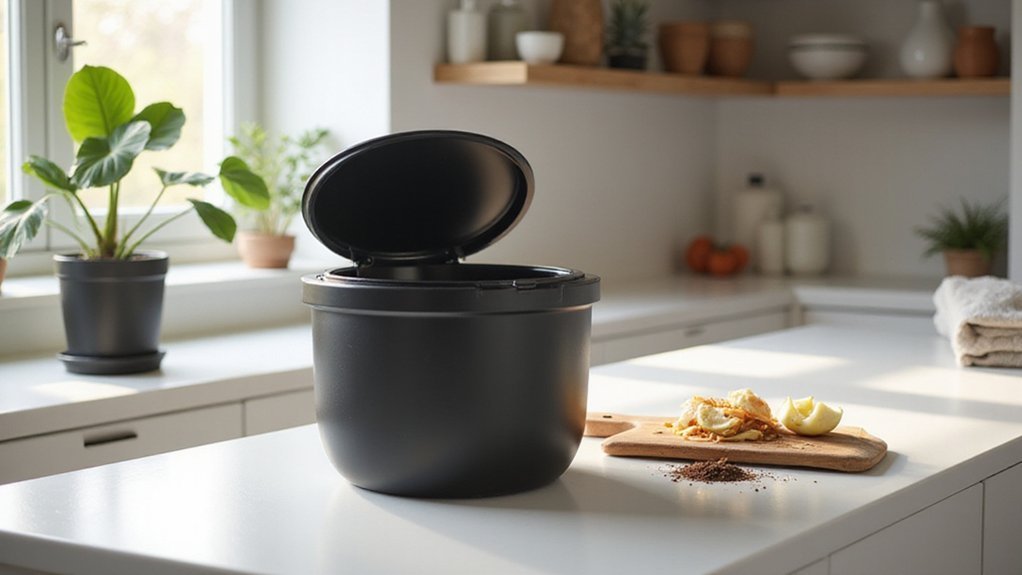
Does a Compost Bin Smell? Tips for Odor-Free Composting
If your compost bin smells more like rotten garbage than fresh earth, you’re not alone. A healthy compost shouldn’t have a foul odor; it should smell earthy and natural.
The good news is that most smell issues come down to moisture, oxygen, or an imbalance of greens and browns.
Stay tuned—here’s how to keep your compost fresh and odor-free.
Why Does My Compost Bin Smell So Bad?
The primary cause of bad odors in your compost bin is the development of anaerobic conditions. When your compost exceeds about 60% moisture content, it becomes waterlogged, creating an environment where oxygen is scarce. This suppresses the activity of beneficial microbes and allows anaerobic bacteria to thrive, producing foul gases like hydrogen sulfide and ammonia. You can recognize this issue if your compost feels overly soggy, resembling a waterlogged sponge rather than a firm, crumbly texture. Proper ventilation in a bin, similar to the airflow design in a quality chicken coop, helps maintain aerobic conditions and prevent odor buildup. For best results, you can model your bin’s ventilation after easy DIY projects that promote steady airflow. Additionally, using safe heat options can help regulate moisture and temperature in the pile during cold weather.
An imbalance in the carbon-to-nitrogen ratio also leads to unpleasant smells. If you add too many green materials such as kitchen scraps without enough brown materials like leaves or newspaper, decomposition stalls, and rotten odors develop. Aim for a balanced mix of roughly 25 to 30 parts brown to one part green to promote proper breakdown.
Finally, failing to turn your compost regularly reduces oxygen levels inside the bin. Without regular turning—at least once a week—oxygen depletes, and anaerobic conditions set in, resulting in that stinky, foul smell. Turning aerates the pile, keeps microbes active, and helps prevent these unpleasant odors from forming.
Quick Fixes to Stop Compost Odors Right Now
To stop compost odors immediately, start by adding dry browns such as straw or shredded cardboard. Use a volume ratio of three parts browns to one part greens to absorb excess moisture and balance the carbon-to-nitrogen ratio. Choosing a well-designed system, such as the top options reviewed in a reliable guide, can further prevent odors by ensuring proper airflow. Next, aerate the compost by turning the pile with a fork or creating air channels with a stick to release trapped gases. For odor neutralization, sprinkle biochar or hardwood ash over slimy layers, as they chemically absorb smells. Always cap your compost inputs by avoiding meat and dairy products, and protect the bin from rain. If you squeeze a handful and water drips out, it indicates excess moisture—add more browns and turn the pile again. These quick steps effectively eliminate odors without needing to dig into the soggy core. For larger piles, consider using a wheelbarrow with handles to easily transport fresh browns from storage to the bin. For those who want to explore more permanent solutions, selecting a wood duck nesting box can help you design a dedicated outdoor system that keeps your compost dry and aerated.
Stop Compost Odor by Fixing a Soggy, Stinky Pile
To fix a soggy, stinky compost pile, managing moisture is crucial. Immediately add dry amendments such as sawdust, shredded paper, or wood chips. These materials absorb excess water and help create air pockets throughout the pile, which are essential for proper decomposition. Ensure your pile’s base has good drainage, and cover it to shield from rain—using a closed bin or plastic tarp works well. To check moisture levels, squeeze a handful of compost; if water drips out, it’s too wet. Aim for a wrung-out sponge feel, indicating the right balance. Avoid adding meat, bones, and dairy, as these can cause rot and odors; focus mostly on plant-based inputs to keep your compost fresh and odor-free. For a more contained and manageable system, consider using a mason jar with lids for small-scale indoor composting. If you prefer a larger outdoor setup, following a DIY build guide can help you construct a well-ventilated bin that prevents moisture buildup and odors. For larger outdoor piles, using a biggest watering can can help you evenly distribute moisture without oversaturating the material.
Balance Greens and Browns to Stop Sour Smells
To stop sour smells from your compost bin, you need to balance the greens and browns. Aim for a 3:1 ratio of browns to greens by volume, which helps maintain the ideal carbon-to-nitrogen ratio of around 30:1. Too many green materials, like kitchen scraps, without enough brown materials such as leaves or straw, create anaerobic conditions that lead to sour odors. For an enclosed system with high-moisture inputs, a well-ventilated coop design can similarly prevent anaerobic conditions and foul smells. In a raised bed garden, the proper depth of your soil layer also influences drainage and aeration, which are critical for healthy root development.
Start with a base layer of coarse brown materials to prevent compaction. Each time you add green materials, cover them thoroughly with dry brown material to absorb excess moisture and improve airflow. If sour smells persist, add more dry leaves or straw to further absorb moisture and increase aeration. Turning your compost pile weekly circulates oxygen and accelerates decomposition, which helps restore balance and eliminate the sour stench.
Which Foods Are Causing the Smell? (Remove These)
Foods to avoid in your compost that cause bad odors include high-fat foods like meat, fish, cooking oils, and butter. These create anaerobic zones, producing stinky hydrogen sulfide gas. Dairy products such as cheese, yogurt, and milk release ammonia-like fumes as they break down slowly, contributing to unpleasant smells.
Cooked meats and fish scraps ferment and emit sulfurous gases, which intensify odors. Processed foods like sauces, pasta, and candy can disrupt the carbon-nitrogen balance essential for proper composting. These ingredients coat particles, block oxygen flow, and attract pests, further worsening the smell. Ensuring your compost bin has proper insulation for the chicken coop can help regulate temperature and reduce odor issues.
To keep your compost smelling fresh, remove all fats, dairy, meat, and oily leftovers before adding scraps. Instead, stick to plant-based waste such as fruit and vegetable peels, coffee grounds, and yard trimmings. Properly managing these offensive items helps prevent rancid odors and keeps your compost decomposing healthily. Balancing green and brown materials is critical, as excess greens make compost wet and sticky, worsening odors.
Turn Your Compost Weekly to Stop Smells at the Source
Turning your compost weekly is essential for preventing odors at the source. It introduces oxygen, which stops anaerobic decay that produces foul sulfur compounds. Without turning, methane can build up, creating stagnant, smelly pockets. By mixing the outer materials into the center, you restore aerobic conditions, encouraging beneficial microbes and stopping bad odors before they start. You can use compostable bags to line your kitchen bin, making it easier to transport food scraps to the pile without mess. For added convenience, position your pile near a duck coop to easily incorporate nitrogen-rich duck droppings into the compost. Placing your pile next to a secure chicken coop helps you gather high-quality nitrogen from chicken manure as well.
In addition, weekly turning breaks up compacted clumps that trap heat and moisture, improving overall aeration. A simple tool like a pitchfork or shovel works well—just mix the outer layers into the middle. Turn your pile when core temperatures begin to drop, usually every 5–7 days for active compost. During each turn, add coarse browns such as straw to help maintain air channels. This consistent habit keeps odors in check and ensures your compost stays fresh and productive. Maintaining a balanced CN ratio of roughly three parts browns to one part greens by volume further prevents anaerobic conditions that cause foul smells.
Prevent Compost Smells With a Simple Moisture Check
Measuring moisture with the squeeze test is the simplest way to prevent compost smells. The goal is to keep your compost moist enough to feel like a damp sponge—damp but not soggy. Grab a handful from the middle of your pile and squeeze firmly. If water drips out, the compost is too wet and needs dry brown materials like shredded cardboard or sawdust to absorb excess moisture. If the compost crumbles easily and doesn’t hold its shape, it’s too dry and requires even watering. Maintaining this balance weekly—especially after rain or adding fresh greens—prevents sour, rotten odors from developing.
Place Your Bin in Shade and on Bare Soil to Prevent Rot
Placing your compost bin in partial shade and directly on bare soil is essential for preventing rot. Shade helps maintain proper moisture levels by slowing down quick evaporation, so you won’t need to water your compost as often. It also shields the pile from intense sunlight that can raise internal temperatures too high, accelerating decomposition and increasing the risk of rot. In hot, dry regions, shaded bins are particularly beneficial because they reduce moisture loss caused by sun exposure. Bare soil allows leachate and excess liquids to drain naturally into the ground, preventing soggy, anaerobic conditions that cause foul odors. Additionally, placing the bin on bare soil gives beneficial microbes and insects direct access to your waste, helping it break down faster and keeping the pile well aerated. For homesteaders who also preserve food in glass jars, it is worth noting that Ball Mason jars are not recommended for microwave use as their tempered glass can break under uneven heating. A raised bed garden made from untreated cedar offers similar benefits for plant health by allowing natural drainage and airflow. Avoid placing your bin on concrete or decking, as these surfaces trap moisture and hinder drainage. Choose a level, well-drained spot, and check the ground after heavy rain to ensure water does not pool for more than thirty minutes. Proper placement is a simple yet effective way to keep rot at bay without extra effort. Using a food dehydrator to create low-moisture snacks can also reduce kitchen waste and support a more sustainable composting cycle.
How to Keep Your Compost Odor-Free in Every Season
To keep your compost odor-free in every season, you need to adjust your approach based on weather conditions. During winter, insulate your compost bin by placing it in a sheltered, cool spot away from radiators or direct heat sources. This prevents heat spikes that can lead to rot and odors. In rainy springs, perform a squeeze test; if the compost drips, add dry brown materials like leaves or shredded paper immediately to absorb excess moisture. Conversely, in hot and dry summers, water your compost pile regularly to prevent it from drying out completely. Always layer a 4-inch carbon-rich base like straw or shredded paper under green materials to help seal in odors. For long-term storage of dry brown materials, consider using mason glass jars to keep them fresh and pest-free. Remember to empty kitchen scraps weekly and avoid adding meat, bones, or dairy products, which are more likely to cause smells and attract pests. Using a well-designed watering can helps you apply water evenly during dry spells without over-saturating the pile. By fine-tuning your ratios and moisture levels for each season, you can maintain a fresh-smelling compost year-round.