How Long Does a Compost Bin Take to Break Down?
Wondering how long it takes for your compost bin to turn scraps into rich soil? The speed can vary from just a few weeks with hot composting to up to two years for cold methods.
How quickly you get finished compost depends on your approach and how you manage factors like moisture, temperature, and the size of your compost materials.
Keep reading to learn how to speed up the process.
What Affects Compost Breakdown Time in Your Bin?
To speed up compost breakdown, aim for a carbon-to-nitrogen (C:N) ratio of about 30:1. This balance encourages microbes to work efficiently, with lower ratios speeding decomposition and higher ones slowing it down. To improve processing time, shred materials into pieces less than one inch, as smaller particles increase surface area for microbes to access. Finer materials like shredded leaves or small wood chips decompose faster than larger, whole items. For instance, choosing a well-designed chicken coop can help you manage manure as a carbon-rich brown material for your compost pile. Similarly, selecting appropriate wood duck nesting boxes can help manage bird waste effectively in a compost system. Using a hygrometer for incubator can help you accurately monitor the moisture levels in your compost, ensuring they stay within the ideal 50% to 60% range for optimal microbial activity.
Environmental conditions are critical. Keep moisture at around 50% to 60%, similar to a damp sponge, to maintain microbial activity while preventing excess water that can limit oxygen flow. Turning your pile every 7 to 10 days helps regulate temperature and aeration, keeping it between 130°F and 160°F to optimize decomposition speed.
Material diversity also influences breakdown time. Kitchen scraps often turn into compost in 1 to 2 weeks, grass clippings in 2 to 4 weeks, while twigs can take 6 to 12 weeks. Mixing different materials ensures a balanced and efficient composting process.
Hot vs. Cold Composting: Which Method Cuts Best?
Hot composting can produce usable compost in as little as 18 days to 8 weeks, making it significantly faster than cold composting. The key difference lies in temperature: hot piles reach 130 to 160°F, which accelerates microbial activity. This high heat kills weed seeds and pathogens within days, ensuring cleaner compost. To maintain these temperatures, you need to turn the pile every 48 hours and keep the carbon-to-nitrogen ratio precise.
In contrast, cold composting operates passively at ambient temperatures below 90°F. Microbial activity proceeds slowly, so materials break down over 6 to 24 months. You can add compostable materials anytime, and turning the pile monthly—or not at all—is sufficient. While cold composting takes longer, it requires less effort and fewer adjustments, making it suitable for those seeking a low-maintenance approach. Your reward with hot composting: finished compost up to 8 times faster compared to cold methods. For homesteaders, freezing soup in mason jars is safe if you leave headspace and use wide-mouth jars.
Which Materials Break Down Fastest in Your Bin?
Plain paper products, grass clippings, and banana peels decompose in just 2 to 4 weeks, making them some of the fastest-breaking materials in your compost bin. Coffee grounds take about 2 to 5 weeks, while vegetable scraps typically break down within 2 to 6 weeks. Their high nitrogen content stimulates microbial activity, which accelerates the decay process. This rapid breakdown is driven by the fact that such materials have compromised cell walls and exposed sugars that are nearly broken down before addition, giving microbes an immediate head start. For more detailed advice, consult a homesteader’s practical guide for optimal results.
To maximize decomposition speed, chop or shred these materials into small pieces. This increases their surface area, giving bacteria and fungi easier access to break them down. Also, avoid packing your bin too tightly to maintain proper airflow—oxygen is vital for microbes to do their work efficiently. Just as a gold watering can in gardening games accelerates plant growth, a balanced carbon-to-nitrogen ratio speeds up microbial activity in your bin. By focusing on these quick-breaking materials and ensuring good aeration, you’ll see finished compost sooner.
How Do Moisture and Turning Reduce Compost Time?
Maintaining the right moisture level and turning your compost regularly can cut down the overall composting time significantly. Aim for a moisture content similar to a wrung-out sponge—around 40 to 60 percent—which creates optimal conditions for microbial activity. Too wet and you risk creating anaerobic spots that slow decomposition, while too dry halts microbial processes entirely. Turning the pile every one to two weeks reintroduces oxygen, breaks up dense clumps, and helps evaporate excess moisture. This process keeps the compost temperature between 135°F and 160°F, the ideal range for fast enzyme activity. It also promotes an even distribution of nutrients, leading to a healthier, more balanced compost. Consistently adding water when the pile feels dry and turning it prevents foul odors, rotting, and delays, ensuring faster and more efficient composting. Turning at 160°F also helps control temperature and prevent overheating on the brink of anaerobic conditions. For best results, you can apply a similar approach to building owl nesting boxes, which also benefits from proper aeration and moisture management during construction.
Does Pile Size Really Change the Timetable?
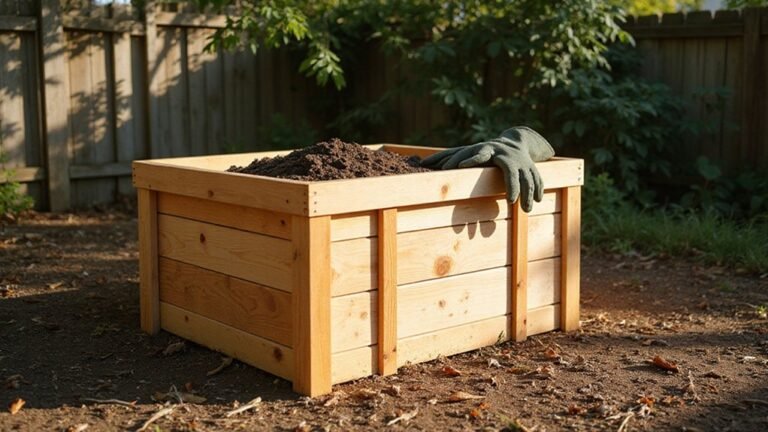
Pile size of at least one cubic yard (about 3 feet on each side) is essential for maintaining the proper composting temperature. This size allows the pile to retain enough heat through microbial activity to reach and sustain thermophilic temperatures between 130°F and 160°F, which are crucial for rapid decomposition. Additionally, temperatures above 131°F for three days can effectively kill weed seeds, ensuring a clean final product. Smaller piles often cannot generate or hold this level of heat, resulting in slower, mesophilic decomposition that can take several months instead of Weeks. A pile much smaller than one cubic yard will struggle to reach thermophilic temperatures at all.
For hot composting, a pile size between one and five cubic yards is optimal. Piles larger than four cubic yards tend to have oxygen penetration issues at their core, which means you need to turn the pile more frequently to keep the process aerobic. A well-balanced size, around three cubic yards (a cube about 3 feet on each side), strikes the right mix. It retains heat efficiently without compromising airflow. While a one-cubic-yard pile may finish in 6 to 12 weeks, larger piles of three to five cubic yards usually take 3 to 6 months to fully decompose without intensive management.
When to Start for the Quickest Seasonal Breakdown
Starting your compost pile in early summer produces the quickest breakdown, often completing in just 8 to 12 weeks. During this period, the summer heat helps maintain temperatures of 140–160°F, which speeds up microbial activity and decomposition. Use green materials like grass clippings and vegetable scraps from your garden to provide the necessary nitrogen boost. To prevent pests such as rodents or flies from being attracted to your compost bin, bury food scraps deep inside the pile. Managing odors is also straightforward with enough brown materials like dried leaves, which help balance the nitrogen-rich greens. Since summer’s consistent warmth keeps microbes active, you won’t need to turn the pile as often, as natural heat sustains decomposition. Just ensure your pile stays moist but not soggy, and you’ll have finished compost in record time. For even faster results, you can add practical tips from experienced homesteaders to boost your bin’s overall efficiency.
How Long Until Specific Materials Disappear?
Fruit and vegetable scraps can disappear from your compost bin in as little as 1 to 2 weeks, especially when conditions are ideal. These materials decompose quickly because they are high in moisture and easily break down with the activity of microorganisms. To speed up the process, maintain proper moisture levels by harvesting rainwater and regularly turning your compost to introduce oxygen. Tougher materials like woody branches take significantly longer—usually between 6 to 12 months—because their dense structure resists decomposition. Chopping branches into 1-inch pieces or smaller can accelerate decay, but patience is still necessary for these coarse materials. Grass clippings also break down swiftly, typically within 1 to 2 weeks when mixed thoroughly with browns like shredded dry leaves. Shredded dry leaves themselves take about 6 to 9 months to fully decompose. Cooked grains tend to break down in about 2 to 4 weeks, while soft fruit pulp can vanish in just 7 to 14 days under optimal conditions. Proper moisture, regular turning, and proper sizing are key factors that influence these varying breakdown times. Once fully composted, you can brew your own compost tea to nourish your plants.
Can You Really Speed Compost Breakdown to 4 Weeks?
Yes, you can transform kitchen scraps and yard waste into finished compost in about four weeks by following a strict hot composting protocol. To achieve this, maintain a carbon-to-nitrogen ratio of 25:1 to 30:1, using a layered structure with three parts brown materials to one part green materials. Chop all materials to under two inches, especially woody bits to approximately 0.75 inches, to speed up decomposition. Keep the moisture level like a damp sponge—around 45 to 60 percent—so the pile stays moist but not soggy. Turn the pile every three to four days to encourage even breakdown and airflow. Ensure core temperatures stay above 55 degrees Celsius for at least 48 hours to kill pathogens and weed seeds. However, be aware that certain resilient perennial weeds should not be composted unless you are certain the pile reached high enough temperatures to ensure they do not survive composting. Insulate the heap with straw bales or a tarp, and aim for a volume of about 3 by 3 by 3 feet to retain heat. Avoid relying on worms in this process, as the high temperatures are not conducive to worm activity. Instead, focus on aggressive turning and reducing particle size; without this active management, decomposition can take ten weeks to several months or longer. For best results, consider adding a layer of quality topsoil to the base of your bin to introduce beneficial microorganisms and improve drainage. If you are interested in other projects that require careful moisture and temperature management, building a DIY food dehydrator follows similar principles for preserving food.