DIY Chick Feeder: Easy Homemade Guide
Worried about wasting feed and spending too much on chick feed? A simple DIY chick feeder can cut waste by up to half and save you hundreds a year.
With options like a PVC tube, bucket trough, or plastic jug, you can build one in just 10 to 15 minutes for around $2 to $15.
Keep reading to find out which design works best for you.
Why Build a DIY Chick Feeder in the First Place?
Building a DIY chick feeder makes financial sense because it can reduce feed waste by up to 50% and save you between $300 and $800 annually. By designing your own feeder, you prevent chickens from scratching and spilling expensive grain, helping you keep your feed budget in check. A custom setup allows you to adjust the height and feed hole placement to suit different breeds, like bantams or heavy layers. It also simplifies planning your feeding schedule since you can create compartments for timed or rotated access. Elevated and closed-lid systems protect the feed from rain, mold, pests, and contamination, which keeps it fresh longer. This not only cuts household expenses but also reduces disease risks, leading to healthier chickens. To ensure your setup is as durable as the best commercial options, consider integrating wood duck nesting boxes designed for weather resistance and easy maintenance. With a DIY feeder, you’re building an efficient, tailored system that meets your flock’s specific needs while saving money in the long run. For extra durability and ease of cleaning, consider pairing your feeder with top chicken coops that feature built-in waste management systems. When selecting materials, look for top compost bin designs that emphasize pest-proofing and longevity for your feeder project.
Which DIY Chick Feeder Design Is Best for Your Flock?
A PVC pipe design with 2–3 inch holes is best for large flocks. This size prevents head-clogging and allows gravity to dispense feed efficiently from both sides, making it ideal for managing high-volume feeding. Use multiple pipes if necessary to accommodate the flock’s size and ensure all birds can access feed comfortably. This setup reduces waste and minimizes contamination, as the feed is dispensed in a controlled manner. For added durability and easier cleaning, smooth the edges of the holes and consider painting the pipes with a red accent to encourage usage. These gravity-fed systems are built from inexpensive materials, often costing only $15-20.
Gather Your Materials: What You’ll Need
To build this waste-free feeder, you’ll need to gather several essential materials. Start with household tools such as a jigsaw, utility knife, and a drill equipped with a 2-inch hole saw. These will help you cut and shape your components accurately. Additionally, rubber cement and 6-inch zip ties are crucial for securing parts together and ensuring a tight fit. Consider how organic mulches can suppress weeds and retain moisture in your garden beds during the assembly planning. Using sturdy sheet metal prevents rust and extends the feeder’s lifespan in humid climates. For optimal placement, remember that roosting bar height should keep birds comfortable and safe from drafts.
Core structural components include a 5-gallon bucket with a lid, which serves as the main container, a 3-foot section of PVC pipe for feed delivery, chicken wire to create the enclosure, sheet metal for reinforcement or adjustments, and wooden slats for stability and access.
Fasteners like wood screws, PVC cement, and Teflon tape are necessary for assembling and sealing the structure effectively. Don’t forget safety materials: drill four small holes near the bottom of the bucket to allow excess feed and moisture to drain, preventing sogginess. Add a lip at each window opening to contain feed and stop spillage, making daily maintenance easier.
Measurement supplies are equally important. Grab a marker, pencil, and meter stick to make precise markings for cuts, holes, and placements. Having all these items on hand will help you build a sturdy, efficient, and mess-free feeder for your chicks.
Method 1: Build a DIY Chick Feeder With a PVC Tube
To build a PVC tube feeder, start by cutting three pipe sections into the required lengths: 20 inches, 6 inches, and 3 inches. Use a hacksaw to make clean cuts on 3-inch diameter pipe. These pieces will form the main components of your gravity-fed system, which helps minimize wasted feed. Attach the 20-inch piece to the top of a “Y” connector, the 6-inch piece to the bottom, and the 3-inch piece to the angled port. After applying purple primer and PVC cement, glue a cap onto the bottom of the 6-inch pipe to contain the feed. Drill 3/16-inch holes in the pipe for mounting support and 1/4-inch holes near the top for securing the feeder. Position the pipe so it sits about 1/4 to 1/2 inch above the feeding dish to allow easy access for birds. This setup is designed for easy external refilling so you can reduce daily feeding chores. Let the glue cure for 24 hours before hanging your feeder. As noted in a duck coop build, using a gravity-fed system also helps minimize spilled feed that can attract pests. This design reduces feed spillage, supports pollution prevention, and encourages safe bird feeding in your community. For added protection against rodents, consider using hardware cloth to cover the feeder’s intake opening.
Method 2: Make a DIY Chick Feeder From a Bucket Trough
To convert a 5-gallon plastic bucket into a chick feeder, start by flipping it upside down. Measure and mark four spots, each 4 inches from the closed end of the bucket. Drill 3-inch holes at these marks to create access points for the chicks. Insert PVC 90-degree elbow ports into each hole, making sure they face the bottom of the bucket. The height of the bucket helps keep feed clean by reducing ground contamination, which benefits chick health. This approach offers a cost-effective alternative to commercial feeders. For optimal durability, consider using a BPA-free plastic bucket similar to those found in the best raised bed garden kits. When selecting materials, look for the same compostable certification used for the best compostable bags to ensure eco-friendly disposal at the end of the feeder’s life. The bucket’s design also helps prevent feed from being scattered, similar to how a proper raised bed height minimizes soil disturbance and waste in gardening.
Before assembly, sand all cut edges to prevent injury. Seal the ports with PVC cement and apply silicone caulk around the edges to ensure a watertight fit. Wipe the interior with a cloth to remove any plastic debris before filling with feed. Regularly check the seals for wear and replace them as needed to prolong the lifespan of the feeder. With a capacity of 25 pounds, this DIY setup minimizes refills, keeping feeding costs low while maintaining healthy, well-fed chicks.
Method 3: Turn a Plastic Jug Into a Hanging DIY Chick Feeder
To turn a plastic jug into a hanging DIY chick feeder, you’ll need a sturdy 5-gallon plastic milk jug. Start by cutting three rectangular windows smaller than your chicks’ heads to allow access while preventing them from squeezing through. Punch drainage holes in the bottom to keep the feed dry and fresh. For the perch, insert a wooden dowel through paired holes just below the windows and secure it with strong adhesive to prevent wobbling. Drill top holes for wire or string to hang the feeder securely inside the coop. Using a dark-colored jug can help protect the feed from light, which may help prevent spoilage. To ensure safety, smooth any sharp edges around the cut windows and check that the perch remains stable. Hang it from a secure hook at a height where chicks can stand comfortably without spillage. For improved stability at fairs or shows, consider replacing the hanging string with a zip tie or safety wire to reduce the risk of accidental detachment. For a more durable setup, you can also seal the attachment points using waterproof exterior-grade materials commonly specified in a chicken coop build guide. Regularly inspect weekly for loose hardware or wear to keep the feeder in good condition. Applying a thin layer of food-safe mineral oil to the wooden dowel can prevent it from absorbing moisture and developing mold. To further enhance durability, consider sealing the cut edges with a waterproof sealant recommended in any chick brooder build guide for moisture resistance.
Seal and Secure Your Feeders to Stop Leaks
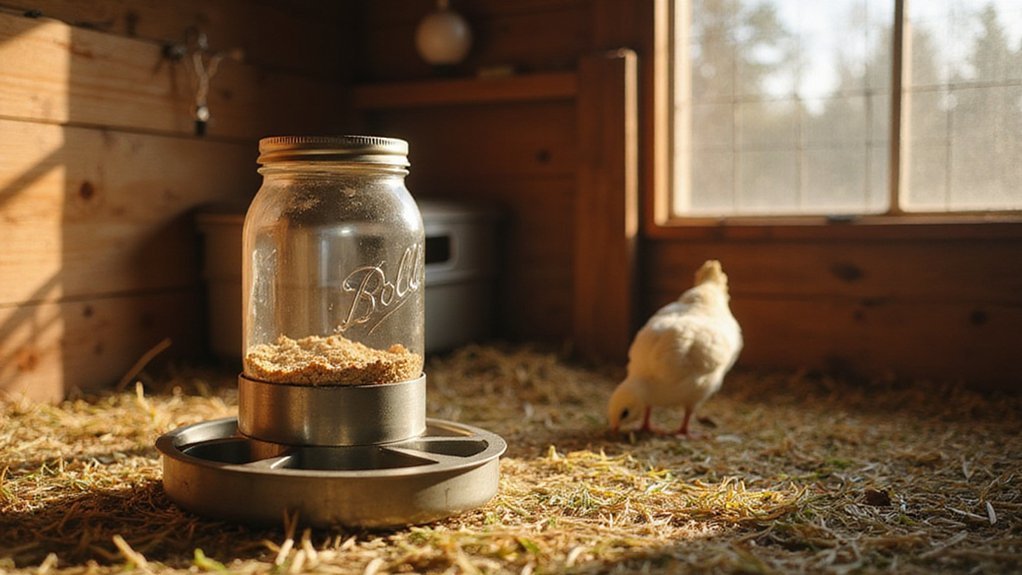
To effectively seal and secure your DIY chick feeders against leaks, start with thorough cleaning of all joints using white vinegar and soapy water. Then, apply marine-grade silicone or rust-resistant epoxy in thin, even coats, ensuring each layer cures completely before adding the next. This approach guarantees a waterproof barrier that prevents feed spoilage and pest intrusion. For areas where water persistently seeps in despite caulking, applying multiple Flex Seal coats creates a durable plastic-like barrier that stops moisture. Using top mason glass jars with quality lids ensures a reliable seal that prevents leaks and keeps feed dry. For a wheelbarrow tire, always check the tire pressure before removal to simplify the process.
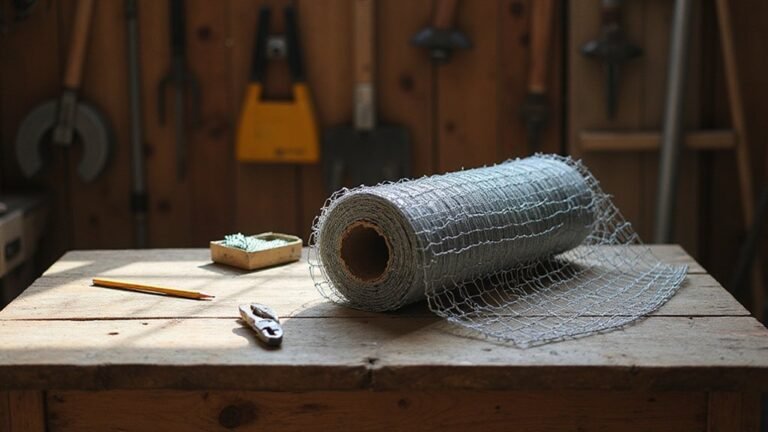
Upgrade your hardware by replacing chicken wire with hardware cloth, which offers a tighter and more secure seal. Install port plugs overnight to block rodents and add mounting screws or eyelets to keep the feeder stable. Regular weekly inspections for cracks or rust, coupled with annual reapplication of sealant, will maintain the integrity of your feeder and ensure pests stay out. Proper sealing and hardware reinforcement lay the foundation for leak-proof, pest-resistant feeding stations that keep your chicks safe.
Where to Place Your DIY Chick Feeder for 50 Birds
Place your DIY chick feeder at least 30 feet away from driveway gates and 50 feet from garage doors to minimize startling noises. Position it 100 feet from children’s playgrounds to reduce sudden human movement that could scare the birds. Elevate the feeder 4.5 to 6 feet above ground to prevent moisture contamination and make feeding easier for adult birds. Ensure there is at least 3 feet of vertical clearance below the feeder for safe entry and exit. Keep it 5 to 10 feet from shrubs or trees, providing quick escape routes from predators. Place the feeder under a roofed overhang to shield seed from rain. If you have multiple feeders, space them 8 to 10 feet apart to prevent crowding and encourage even feeding among your flock. For long-term storage of any bulk feed, first dehydrate apples in a food dehydrator to ensure moisture-free, mold-resistant treats for your birds. A step-by-step build guide for constructing the dehydrator yourself can help you save money and customize it for drying fruits. Using PVC pipe for construction allows the feeder to be easily disassembled and cleaned, reducing feed waste and mess. Raised garden beds can also serve as a stable platform for your feeder, offering elevated herb gardening benefits for dual-purpose yard use.
Which Design Saves You More Time and Money?
The bucket port feeder saves you more time and money overall. Assembly takes only 10 minutes with just 2 tools, compared to the PVC trough, which takes 15 minutes and 3 tools. Weekly maintenance for the bucket is about 5 minutes, while the trough requires 10 minutes. In terms of daily feed spillage costs, the bucket incurs only $0.50, whereas the trough costs $1.20. The bucket’s $15 material cost is offset by lower feed loss and a longer lifespan of around 3 years. Its sustainability also benefits you by reducing waste since it’s a repurposed item. The trough, costing only $2 to build, loses value through higher spillage and a shorter 2-year life span. For managing 50 birds, choosing the bucket feeder results in significant time savings and lower overall expenses. The perfect soil thermometer ensures your garden thrives by monitoring ground temperature for optimal planting conditions.