What Size Should Chicken Nesting Boxes Be?
Want to know the right size for your chicken nesting boxes? The key is having a space that comfortably fits one hen, keeps eggs safe, and minimizes crowding.
For most standard breeds, a box around 12 inches on each side works well.
But size can vary based on your flock. Keep reading to find out how to choose the best fit for your hens.
What Is the Minimum Nesting Box Size for Standard Chickens?
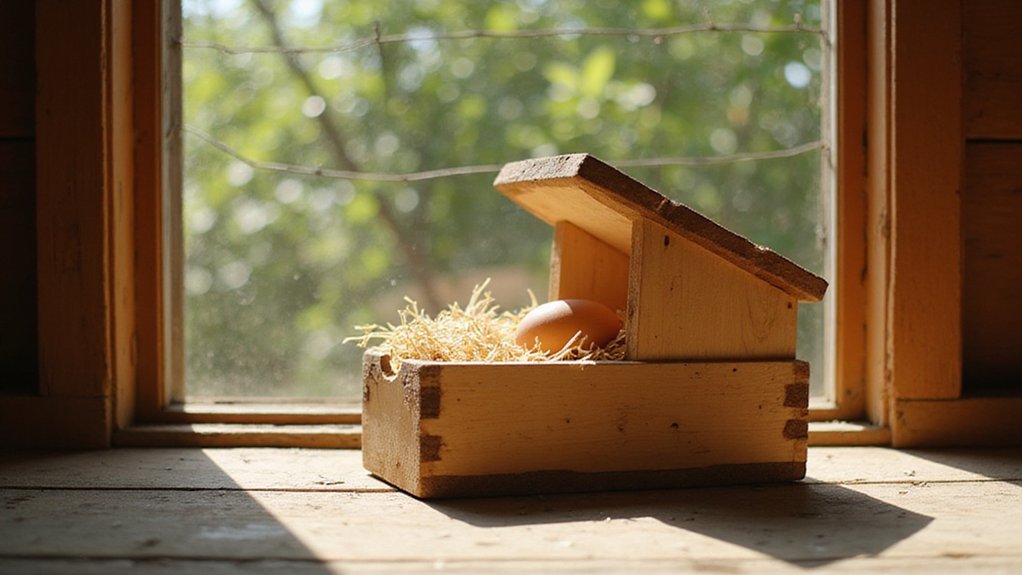
The minimum size for a standard chicken nesting box is 12 inches wide, 12 inches deep, and 12 inches tall. This size offers a snug fit for an average hen, preventing overcrowding and keeping the coop cleaner. A box of this dimension minimizes the chance of two hens squeezing in together, reducing egg breakage and mess during collection. It also promotes calm laying behavior by giving each hen its own space. Additionally, a properly sized box improves ventilation by avoiding large, bulky enclosures that trap moisture and ammonia. Sticking to this 12-inch cube ensures breeds like Leghorns or Rhode Island Reds can sit comfortably without hunching and helps contain bedding securely. Using a box smaller than 12 inches, such as 10 inches, is only suitable for bantam breeds and not standard chickens. Selecting a top-rated coop ensures the nesting boxes are properly constructed to support this ideal size, as reviewed in the best chicken coop guides. For optimal comfort, the height of roosting bars should also be considered to prevent hens from sleeping inside the nesting boxes. Using the best soil for the surrounding garden area can also support healthy foraging conditions for your flock.
How Much Room Do Large and Heavy Breeds Really Need?
Large and heavy breeds like Brahmas, Jersey Giants, and Cornish need a minimum of 16 inches in height for comfortable movement, especially during brooding. For width, aim for at least 14 inches, and a similar 14-inch height works well for most large breeds such as Sussex or Marans. A 14-inch square footprint with 12 to 14 inches of depth serves as a good baseline for space, but heavy breeds benefit from a full 15-inch cube, providing ample room to stand, turn, and express natural behaviors. These dimensions help prevent cramped conditions that can lead to stress and health issues. For those preserving feed or supplies, vacuum sealers for mason jars can help maintain freshness and reduce waste. Building your coop with these measurements ensures better development, more consistent laying, and calmer birds, which ultimately reduces breakage and cleaning time. Remember, don’t skimp on height—heavy breeds need that vertical space to move comfortably and avoid injury. Using pallet coop plans can simplify construction while keeping these exact dimensions in mind for sturdy, cost-effective housing.
The Right Nest Box Dimensions for Bantams and Small Breeds
The ideal nest box dimensions for bantams are 10 inches wide, 10 inches deep, and 12 inches high. This compact size allows for easy egg collection and keeps bedding materials contained. Adding a 4- to 6-inch high wooden lip along the front prevents eggs and bedding from spilling out, reducing cleanup time. For small non-bantam breeds like Leghorns, a size of 12 inches by 12 inches by 12 inches is suitable. A general guideline is to provide one nest box for every three to four hens to minimize competition and egg breakage. Mount the boxes 18 to 20 inches above the ground—always lower than their roosting bars—to discourage hens from sleeping in the nests and ensure they stay clean for laying. For optimal brooding conditions, consider using heat lamp bulbs that emit warmth without excessive light, similar to the ceramic options reviewed for reptile enclosures. Sticking to these measurements provides a cozy, functional space tailored to smaller breeds. For broader flock management, a quality brooder ensures chicks transition to nesting boxes with minimal stress and healthy development.
How Many Nesting Boxes Do You Need for Your Flock?
For a flock of 8 to 10 hens, providing 2 to 3 nesting boxes is ideal. This range ensures that hens have enough space to lay eggs comfortably without overcrowding. Generally, aim for one nesting box per 3 to 5 hens, which helps prevent competition and stress. If you have a slightly larger flock, like 11 to 15 hens, consider 3 to 4 boxes. Keep in mind that giving more boxes than hens need reduces squabbles over the best spots and encourages hens to lay in less crowded areas. Multiply your flock size by 0.25 to 0.33 to get a quick estimate, then add one box for safety to accommodate busy or shy hens. To prevent broken eggs and egg-eating behavior from overcrowding, this calculation aligns with providing at least 2 nesting boxes for every 3 hens. However, if you are using supplemental heat options for chicken coops, you must ensure these boxes remain safely positioned away from any heat sources to avoid fire hazards.
Where to Place Nest Boxes for Safety and Easy Access
To ensure your hens feel safe and lay reliably, place nest boxes in the darkest, quietest corner of the coop. Keep them away from roosts, feeders, and direct sunlight to minimize disturbances. Elevate the boxes 18 to 24 inches off the ground to deter pests and prevent moisture buildup, while still allowing hens to jump in easily—they shouldn’t need to leap more than 3 feet. Arrange the boxes along interior walls with 2 to 4 inches between each, and position them below the roosting bars to avoid droppings contamination. Choose a site with good airflow but no drafts, and use a solid back wall for added security. Opt for dark, neutral colors like brown or green to help hens feel hidden. Face the boxes north or east to prevent direct sun exposure. Finally, ensure the entrance lip is just 3 to 4 inches high for simple, comfortable access. If constructing boxes from wood, choose rot-resistant wood like cedar or redwood to prevent decay and extend the life of the nest boxes. For consistent egg production, proper dehydrator maintenance is essential to keep fruits and vegetables fresh for long-term storage. Using high-quality, airtight seals on jars can help protect stored feed and treats from moisture and pests, much like mason jar sealers preserve freshness.
Why a Snug Fit Matters More Than Extra Space
A snug fit in your nesting boxes is more beneficial than providing extra space. A tight space prevents multiple hens from sharing, which directly lowers the risk of eggs being crushed. Limiting how much the hen can turn or shift inside the box helps keep eggs intact and safe. Plus, smaller nesting boxes allow you to fit more within your coop, maximizing space efficiency. A snug box also prevents hens from kicking out nesting material, resulting in a cleaner and more stable nesting environment. It discourages distractions and socializing, helping your hen focus solely on laying. Less movement inside the box means fewer broken eggs and less mess, making a tight fit a smart choice for your flock’s safety and your coop’s efficiency. While designed primarily for waterfowl, similar principles of wood duck nesting boxes can inform effective sizing for chicken coops. Using a 1-foot cube size has been confirmed through practical testing as adequate for small to medium flock sizes.