Wheelbarrow or Wheelbarrow? Homesteading Gear Clarified
Deciding between a wheelbarrow and a garden cart for your homestead isn’t as simple as it seems. You might wonder which will make hauling easier or save your back.
The right choice depends on your tasks, terrain, and how much weight you need to move.
Keep reading to find out how to pick the best tool for your needs.
Wheelbarrow vs Garden Cart: Which One Do You Actually Need?
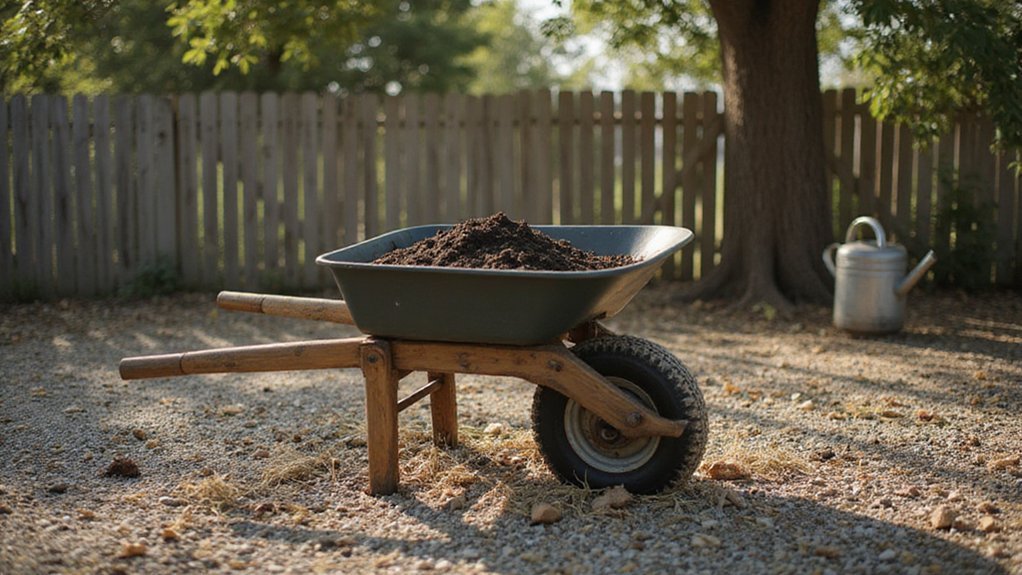
A wheelbarrow offers superior maneuverability over a garden cart in tight spaces and on uneven terrain. Its design typically features one or two front wheels and rear legs, allowing you to pivot easily and navigate narrow gates or garden beds without fuss. This agility makes it ideal for maneuvering through complicated pathways or on slopes, where precise control is essential. You can effortlessly tip and dump materials like loose soil, mulch, or gravel exactly where needed, a task that a four-wheel cart may struggle with due to its broader stability requirements. However, wheelbarrows generally have less capacity than garden carts, making them less suited for hauling large quantities like firewood or heavy loads. But when your focus is on quick, spot-specific tasks in tricky spaces, a wheelbarrow excels at offering control and ease of use. You’re in the driver’s seat, able to pivot and direct your load with less effort and fewer balance concerns, giving you a practical advantage in confined or uneven areas. For those raising Silkies, a well-designed coop should prioritize ventilation and predator protection, which are equally critical considerations for any homesteading gear decision. For consistent watering of garden beds, many homesteaders also rely on the Bloem Easy Pour design for precise and effortless liquid transport. Choosing a cart with a similar balance-friendly build can simplify daily coop maintenance tasks like moving feed and bedding.
Wheelbarrow vs Garden Cart: When Does Each Win?
A wheelbarrow is better suited for uneven terrain, while a garden cart excels on flat surfaces. The single front wheel of a wheelbarrow allows you to navigate slopes and narrow, uneven paths more easily. Its design helps avoid tipping when working on inclines. Conversely, a garden cart with four wheels provides stability on level ground, making it ideal for transporting heavier or bulkier loads, such as up to 1,200 pounds of firewood or stone. When precise dumping is needed, the wheelbarrow’s curved and tiltable tray gives you better control. For carrying large, stable loads across flat terrain, the low deck of a garden cart offers superior support and ease of use. Ultimately, choose the wheelbarrow for maneuverability and dumping on challenging ground, and opt for a garden cart when handling heavy, flat-surface material transports. For instance, a best chicken coop for a flock of ten chickens may be heavy and bulkier, making a garden cart the preferred option if you are moving it across a flat yard. To maintain your sourdough starter successfully, a proper mason jar is essential for consistent fermentation and easy monitoring. When selecting a coop, look for nest box accessibility to ensure easy egg collection and cleaning.
Wheelbarrow vs Garden Cart: Which Features Save Your Back?
A garden cart generally saves your back more than a wheelbarrow because of its enhanced stability, larger capacity, and ergonomic handle design. On flat ground, a cart’s wide wheelbase and four-wheel setup prevent tipping even with uneven or heavy loads. This stability means you don’t need to brace yourself or exert extra effort to keep it balanced, which reduces strain on your spine. With capacities reaching up to 1,200 pounds, a garden cart allows you to move more debris or supplies in fewer trips, decreasing the overall effort and repetitive movements that can backfire over time. The ergonomic handle, often a single pull-type design, encourages you to tilt and drag rather than lift, evenly distributing weight and relieving pressure from your back and arms.
In contrast, wheelbarrows with two handles require you to lift and tilt, supporting much of the load with your arms and spine. This motion tends to cause lasting back strain, especially when carrying heavy or unbalanced loads over flat terrain. Overall, garden carts offer a more back-friendly option for hauling materials across a variety of terrains.
Wheelbarrow vs Garden Cart: How Much Should You Spend?
Spending around $150 to $300 on a reinforced steel garden cart is a smart investment. It offers durability with a steel frame that lasts 3 to 5 years longer than cheaper models, and it can handle up to 1,200 pounds. In contrast, an entry-level plastic cart costing about $80 might haul 400 pounds but will likely need replacing within two seasons. For canning tasks that require hauling heavy produce from the garden, the durability of mason jars is equally important for safe food preservation. Additionally, spending $15 to $25 on solid rubber tires instead of pneumatic ones reduces maintenance costs by roughly $10 per year, since you’ll experience fewer flats and less downtime. Similarly, selecting a Miracle-Gro watering can with a built-in measuring guide ensures accurate mixing of plant food, saving time and resources. For heavy-duty use, such as contracting work, a welded steel cart priced between $300 and $420 provides 7 to 10 years of service, standing up to continuous, rigorous hauling. Choosing the right cart depends on your hauling volume; for occasional use, a mid-range reinforced steel model strikes a good balance between price and longevity. Investing a bit more upfront results in fewer replacements and lower long-term costs compared to opting for the cheapest options. Just as with a cart, selecting the perfect fit for your flock ensures reliable hydration without constant upkeep.
Wheelbarrow vs Garden Cart: What Durability Features Matter?
Durability features that matter most include a reinforced steel frame designed to withstand bending when you load up to 1,200 pounds. Commercial-grade galvanized steel helps prevent rust in wet conditions, extending the lifespan of your equipment. An axle made from solid 1-inch steel provides reliable support during continuous heavy hauling, while ball-bearing hubs reduce friction and wear over time. Thick mounting plates, about 1/4 inch, resist tearing under stress, ensuring stable attachment. For wheels, pneumatic tires at 30 psi cushion against rough terrain, though solid rubber tires eliminate the risk of blowouts. Welded joints strengthen the overall structure by eliminating weak points common in bolted assemblies, making the cart more durable for long-term use. For building applications like coops, pressure treated lumber offers similar resistance to moisture and rot as galvanized steel. For chickens, the ideal roosting bar height helps prevent injury and promotes natural sleep perches.
Wheelbarrow vs Garden Cart: Will It Haul Your Load?
A garden cart generally handles larger loads more efficiently than a wheelbarrow. Steel trays on carts can support up to 1,200 pounds without tipping, whereas a wheelbarrow typically supports only 300 to 400 pounds. Carts are pulled from the front, which requires less exertion than lifting and pushing a wheelbarrow. Their wide wheelbases provide greater stability on slopes, reducing the likelihood of tipping over. Garden carts like Built Hard models feature solid rubber tires that never go flat, eliminating maintenance delays. For poultry keepers, a garden cart can also be used to transport top vent options for chicken coops when upgrading airflow. When selecting soil for these carts, using the best soil for raised beds can improve drainage and nutrient retention for your plants. For coops, one must also consider durable materials like treated wood or metal to withstand weather and predators.
In contrast, wheelbarrows demand more strength to keep upright and for precise control when unloading. You often need to manually balance each load and fight instability on uneven ground, which can cause material erosion and faster wear on shallow trays. When unloading, wheelbarrows are easier to tip precisely into a specific spot. But in tight spaces or narrow paths, their narrow profile makes them more maneuverable.
Wheelbarrow vs Garden Cart: How Do You Stay Safe?
Your safety when using a wheelbarrow or garden cart largely depends on how you load and navigate terrain. With a wheelbarrow, you need to manually balance each load, placing most of the weight toward the front wheel to prevent tipping backward. Improper load distribution can cause instability, requiring you to constantly shift your balance. You may find yourself leaning forward, which can strain your lower back. To stay safe, always bend your legs and keep your back straight when lifting or moving a wheelbarrow. The wheelbarrow’s design as a lever with the axle as the fulcrum aids in lifting heavy loads, but still requires you to manage the center of gravity carefully. For waterfowl habitat projects, selecting the best wood duck nesting boxes can help ensure stable placement near wetland edges.
Garden carts, with four wheels, eliminate much of this balancing act. They distribute weight evenly across all wheels, lowering tip-over risk by approximately 60 percent. Their design also makes pulling less physically demanding on your shoulders and back. For heavy or repeated loads, consider attaching safety harnesses to further reduce strain. When moving on slopes, a wheelbarrow’s single wheel offers better maneuverability but requires careful foot placement to prevent slipping. On flat, open ground, garden carts provide a more stable and ergonomic option, reducing the risk of injury.