Are Egg Cartons Compostable for Garden Use?
Wondering if you can add egg cartons to your compost pile? The good news is that most paper, cardboard, and molded pulp cartons can break down into rich organic matter for your garden.
Just make sure to pick the right ones and prepare them properly. Keep reading for tips on how to turn your egg cartons into garden gold.
Why Plastic and Styrofoam Egg Cartons Contaminate Your Compost
Plastic and Styrofoam egg cartons do not decompose in your compost. Plastic can persist for hundreds of years, while Styrofoam stays chemically intact and breaks down into microplastics. These tiny fragments can contaminate your compost and soil, harming plant roots and soil organisms. When added, they also reduce important features like water retention and airflow within the compost pile. For comparison, high-quality chicken coops often incorporate natural wood materials that fully biodegrade, unlike these synthetic cartons. Chemical leaching is another major concern. PET plastics release toxins, and Styrofoam sheds additives and chemicals, which can kill beneficial bacteria and fungi vital for composting. These chemicals build up over time, disrupting the microbial balance and making it harder for organic matter to break down properly. Instead of creating nutrient-rich compost, you end up with inert debris that damages your soil’s health. Choosing certified compostable bags instead of plastic cartons helps ensure your bin breaks down fully without contamination. A similar principle applies to nesting boxes constructed from durable synthetic materials that never degrade. To maintain a healthy compost and garden, it’s best to avoid plastic and Styrofoam egg cartons entirely.
How Do You Tell if Your Egg Carton Can Go in the Compost?
To determine if your egg carton can go in the compost, start by checking for a “compostable” label printed directly on the bottom or packaging. Look at the material: paper, cardboard, or molded pulp usually indicates it’s compostable. Avoid cartons that are waxed, glossy, or coated in plastic, as these contain materials that resist decomposition. Perform the tear test by trying to rip the carton; compostable ones tear easily and show visible fiber strands. They also feel soft and fibrous to the touch. Before testing, remove all non-paper elements like stickers or plastic windows. Conduct a water test: if a small piece softens and dissolves quickly in water, it’s safe to add to your compost. Skip burning the carton, as black smoke signals chemical coatings unsuitable for compost. If the carton feels like plastic, look for a Resin Identification Code. Codes #1 (PET) and #6 (Styrofoam) are not compostable. For a broader perspective, a brooder box shares a similar principle of selecting materials that are safe for animals, just as you choose compost-safe cartons for your garden. Similarly, choosing wood duck nesting boxes made from untreated wood ensures no harmful chemicals leach into the environment. For an informed purchase, review the top options for compost bins that best suit your garden setup.
What Makes an Egg Carton Compostable?
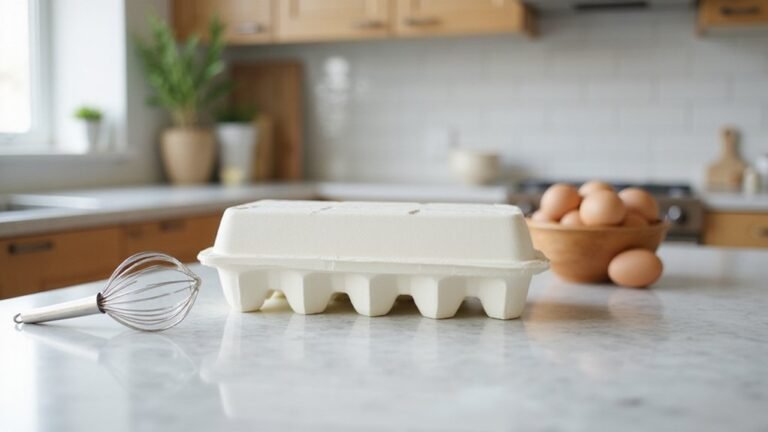
To determine if an egg carton is compostable, look at the material composition. Natural, uncoated materials such as paper pulp, molded fiber, or cardboard are key indicators. These materials break down quickly and safely in compost. Their composition in soil means they decompose into nutrient-rich organic matter and leave no harmful residues behind. In contrast, Styrofoam or plastic polymers do not biodegrade, and any coatings or liners can contaminate your compost pile. To confirm an egg carton’s compostability, check for a dull, fibrous texture. This texture indicates the absence of wax or plastic coatings. Choosing a carton made from natural fibers ensures it serves as a good carbon source, helps balance greens, and manages moisture in your compost. Properly selected materials turn waste into valuable garden compost instead of contributing to persistent pollution.
How to Prepare Egg Cartons for Faster Decomposition
To prepare egg cartons for faster decomposition, start by removing all stickers, labels, and non-compostable inserts like plastic or metal staples. Rinse them thoroughly to wash away residual egg matter, then dry completely to prevent mold growth. Tear or cut the cartons into 1 to 2 inch pieces, which increases the surface area accessible to microorganisms and speeds up breakdown. To further accelerate the process, soak the shredded pieces in water for 5 to 10 minutes to hydrate the fibers. Mix these damp pieces into your compost pile, alternating with green materials such as vegetable scraps or grass clippings. Regular turning of the compost provides oxygen necessary for aerobic decomposition and keeps the process active. Shredding and moistening the cartons beforehand helps avoid long waiting periods. Under proper conditions, they can decompose in about 2 to 4 weeks rather than several months. Maintain the moisture level in your compost similar to a wrung-out sponge to ensure optimal decomposition speed. For homesteaders seeking similar efficiency in food preservation, using a vacuum sealer can greatly extend the shelf life of stored goods and reduce waste.
How Much Egg Carton to Add for Proper Carbon-Nitrogen Balance
You should add 3 to 4 shredded paper egg cartons per kilogram of green waste to achieve a proper carbon-nitrogen balance. Since paper cartons are high in carbon, they need to be offset with nitrogen-rich greens like grass clippings or coffee grounds. For a standard compost batch, including this amount helps maintain the ideal 25:1 to 30:1 carbon-to-nitrogen ratio. This addition also improves soil structure, aeration, and moisture retention through the organic matter of the cartons. If your green waste includes compost weeds like crabgrass, ensure they have not gone to seed to avoid spreading them into the garden. For homesteaders, choosing a durable watering can made from galvanized steel or heavy-duty plastic ensures longevity when applying this compost mixture to garden beds. For those also making jerky, a dedicated food dehydrator ensures consistent drying results without interfering with your composting setup.
In a 20-gallon composter, include about 10 shredded egg cartons along with a minimum of 5 cups of fresh greens. Adjust the green quantity if the cartons are dry or wet—dry cartons require more greens, while wet cartons need less. Be cautious not to overload a small bin; limit it to 2 egg cartons per loading to prevent slow decomposition.
Monitor your composting process for signs of imbalance. If cartons remain intact after 4 weeks, your carbon ratio is too high, and you should add more nitrogen-rich greens to speed up decomposition and keep the process efficient.
Best Ways to Use Egg Cartons in Your Compost System
Once you’ve cleaned and shredded your egg cartons, you can incorporate them into your compost system effectively. Cardboard and pulp egg cartons decompose quickly, usually within a few months, making them a valuable brown carbon source. Glossy or coated cartons, however, pose composting challenges because their slick surfaces resist microbial breakdown and may introduce plastics or chemicals. To keep your pile healthy, watch for warning signs of odor like a sour or ammonia smell, which indicate the need for more browns or better aeration.
Layer shredded cartons as a brown material between green nitrogen-rich inputs like grass clippings or vegetable scraps. Maintain a brown-to-green ratio of about 2:1, and limit egg carton pieces to no more than 10 percent of your pile’s total volume to prevent compaction. Keep the pieces damp but not soaking wet—moisture fuels microbial activity and speeds decomposition. To prevent matting, fluff the compost regularly, which helps aerate the pile and keeps it active. Avoid adding too many cartons at once; instead, distribute shredded pieces throughout the pile.
For stubborn or slower-to-breakdown bits, bury them deeper near the hot center of the pile. This accelerates their breakdown by exposing them to higher temperatures and active microbes. Before adding, check paper textures for plastics or foam; discard any cartons with these elements to ensure your compost stays safe and eco-friendly. For a balanced compost system, consider pairing your egg cartons with a raised bed garden kit to integrate finished compost directly into your growing beds.
Top Benefits of Composting Egg Cartons for Your Garden
Composting egg cartons provides a slow-release carbon source that balances nitrogen-rich greens like kitchen scraps and grass clippings. Shredding the cartons into smaller pieces accelerates breakdown, making nutrients available more quickly. As the paper pulp decomposes, it releases trace minerals and essential nutrients such as nitrogen, phosphorus, and potassium, which boost soil fertility. This process also promotes microbial activity; beneficial bacteria thrive on the paper fibers, speeding up decomposition, improving soil structure, and shielding plants from disease. Over time, organic matter accumulates, creating a rich, self-sustaining topsoil. This improves water retention and aeration, helping roots grow deeply and reducing watering and fertilization needs. Just shred the cartons, add them to your compost pile, and watch your garden flourish. Using cardboard egg cartons supports the half and half rule by providing a balanced carbon source alongside nitrogen-rich greens. A one gallon watering can is ideal for applying compost tea to beds without over-saturating the soil.